FU.BA, an acronym for Future Bakery, represents far more than a traditional bakery. It is an innovative gastronomic initiative that has recently established itself in Madrid’s Chamberí district—specifically at 112 Santa Engracia Street—offering a disruptive concept: the creation of gluten-free bakery and pastry products, free from refined sugars and ultra-processed flours, all without compromising flavor, texture, or sensory appeal.
The driving force behind this concept is Fabián León, a finalist in the first edition of MasterChef Spain in 2013. In this new venture, León channels his experience, culinary sensitivity, and commitment to health into a business model that responds to contemporary dietary trends. FU.BA was born from a desire to promote a more conscious, inclusive, and forward-looking gastronomy—one designed for individuals with intolerances or allergies, as well as for those who simply seek to eat more healthily without renouncing the pleasure of great food.
The brand’s ethos could be summarized in a single phrase: “healthy eating, without it being obvious.” Its mission is clear—to reinterpret classic bakery and pastry creations from a health-conscious perspective, without falling into the trap of bland or overly restrained products. What captivated us from the outset was the project’s authenticity. Starting a design process with such clearly articulated ideas—so intrinsically tied to the brand’s identity—is a rare privilege. From his very first visit to the studio, Fabián León conveyed a precise vision, grounded in the dual notions of origin and future.
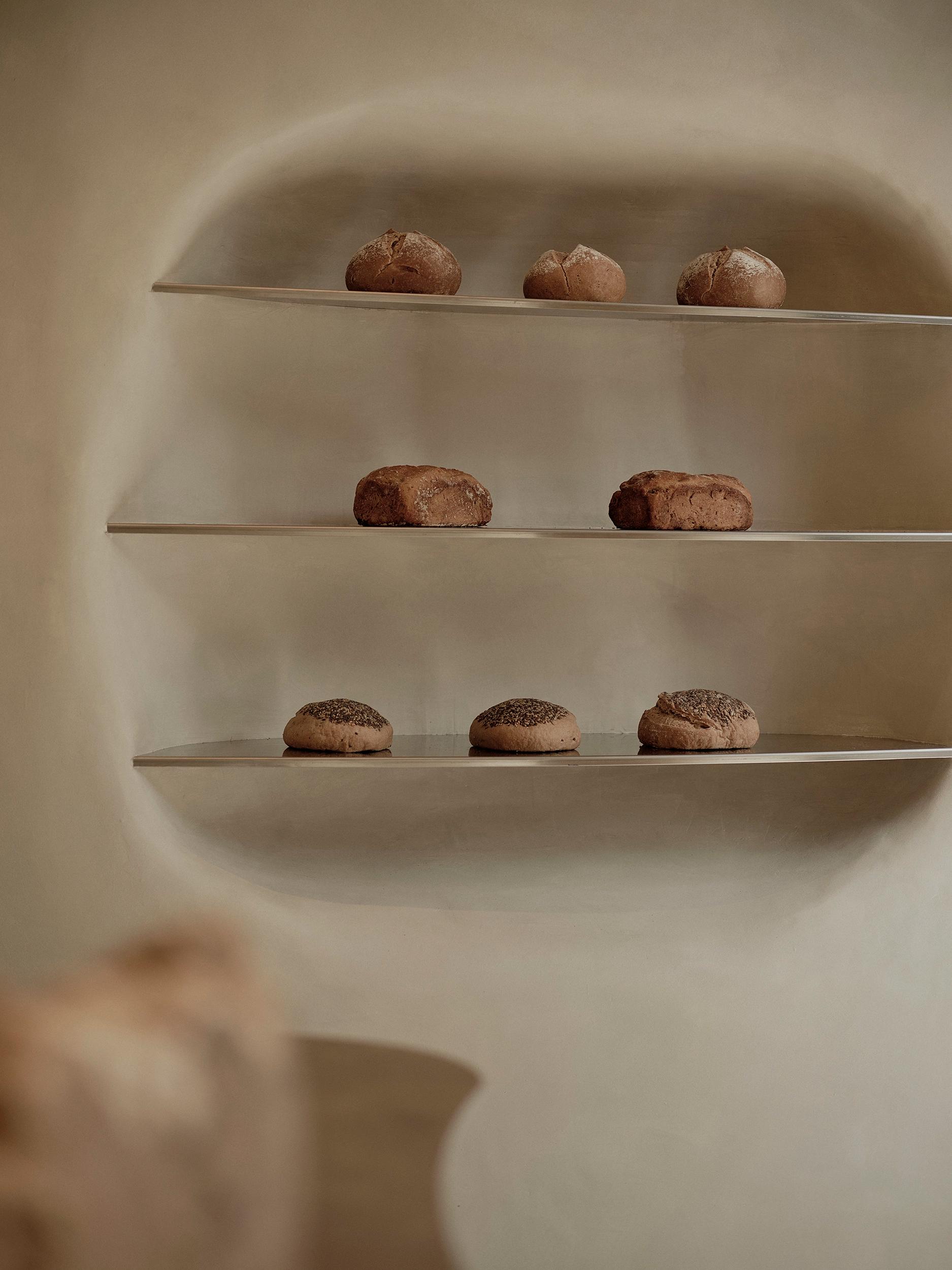
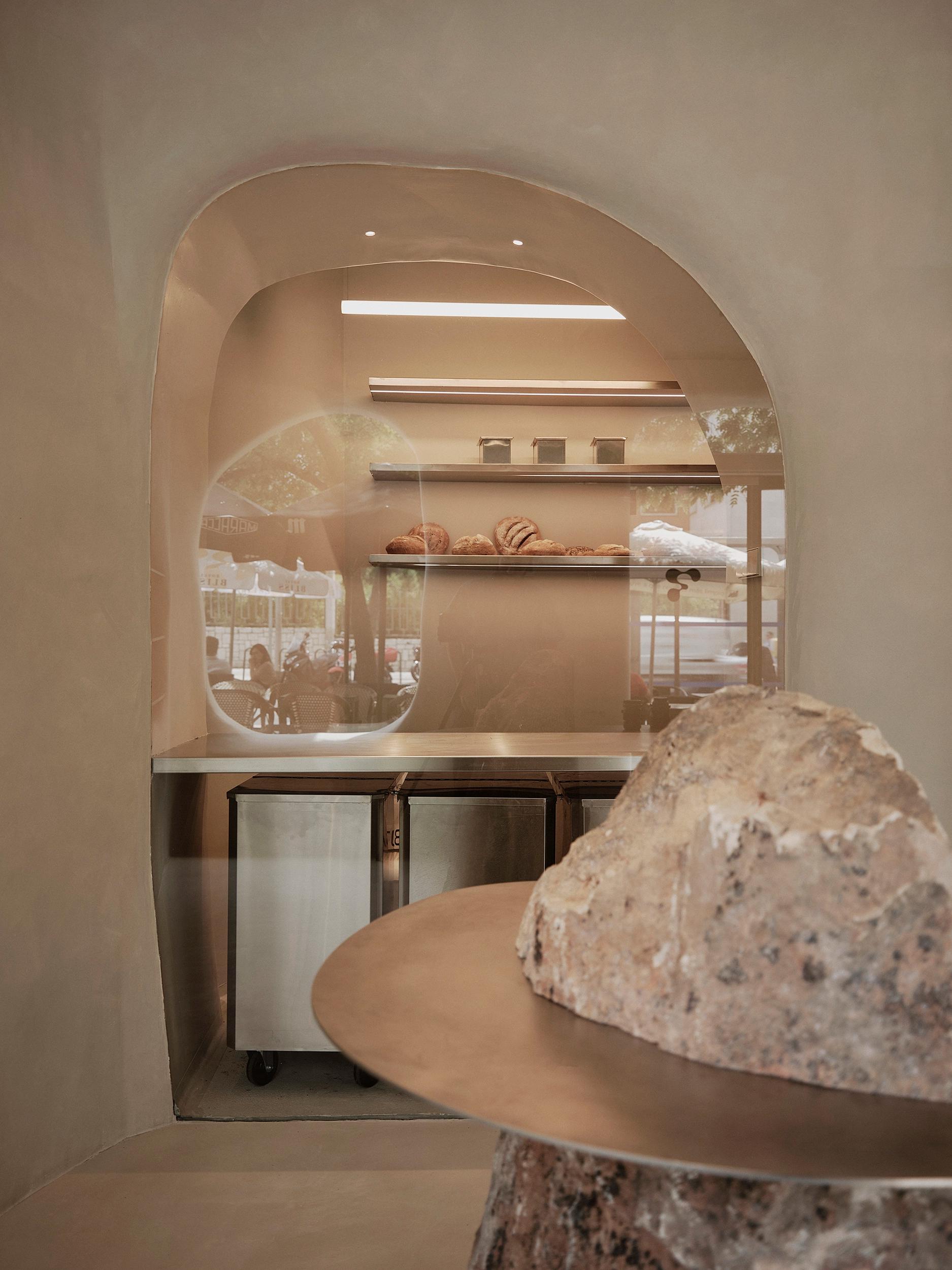
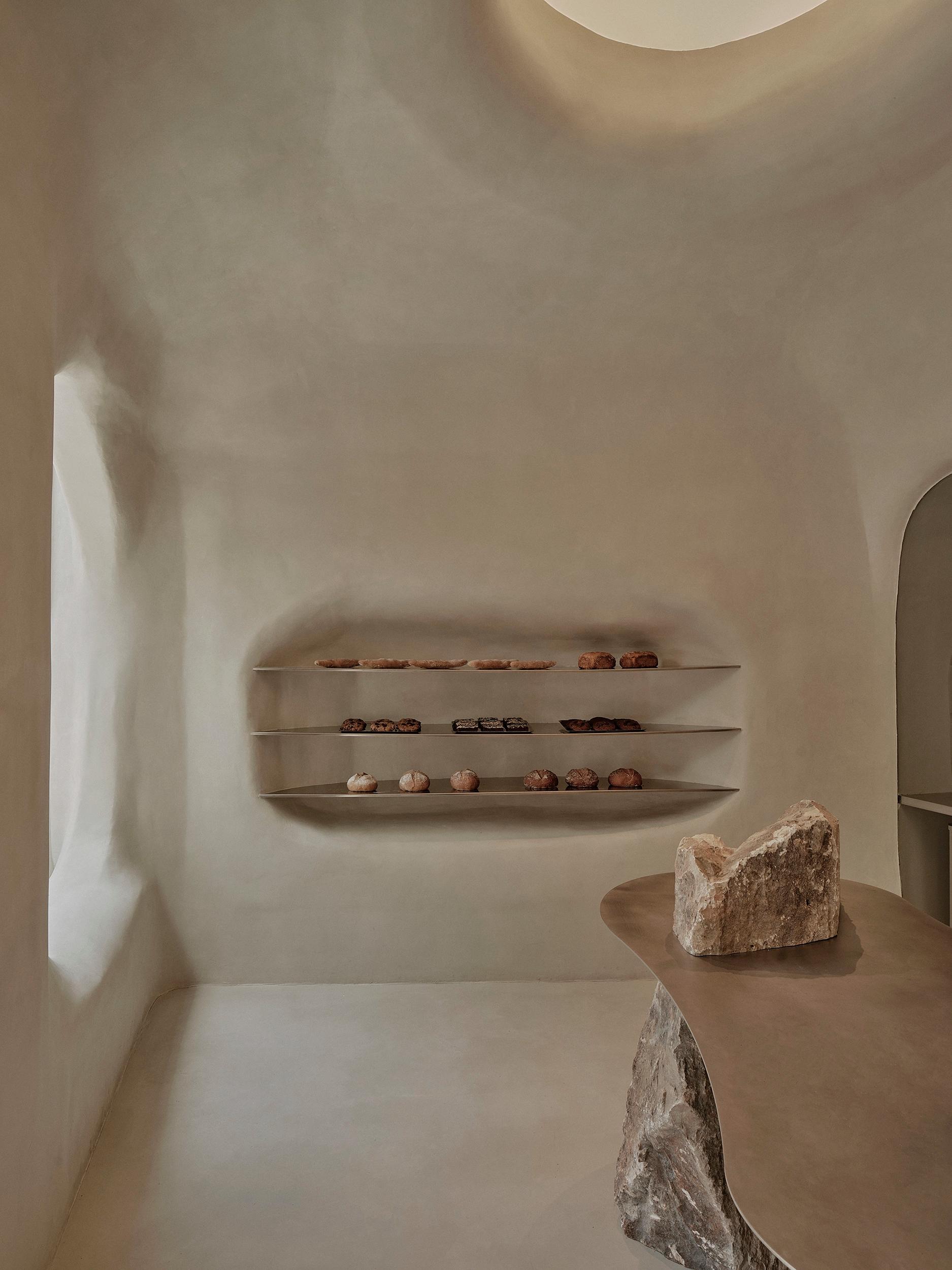
He defined origin as something natural, ancestral, traditional, and organic. Conversely, future was associated with innovation, technology, and the dreamlike. The central challenge lay in decoding the project’s language—an apparent juxtaposition of opposing ideas.
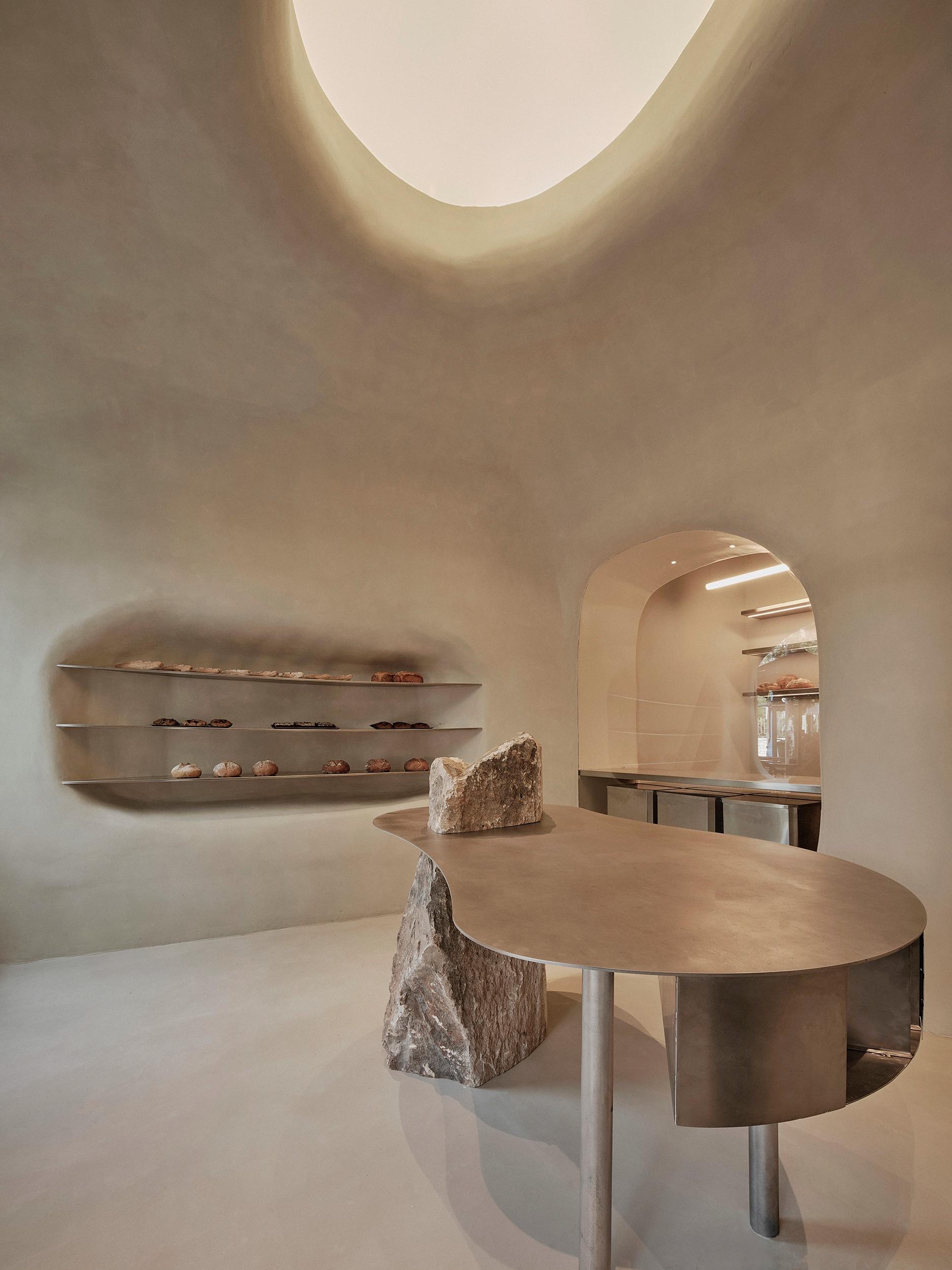
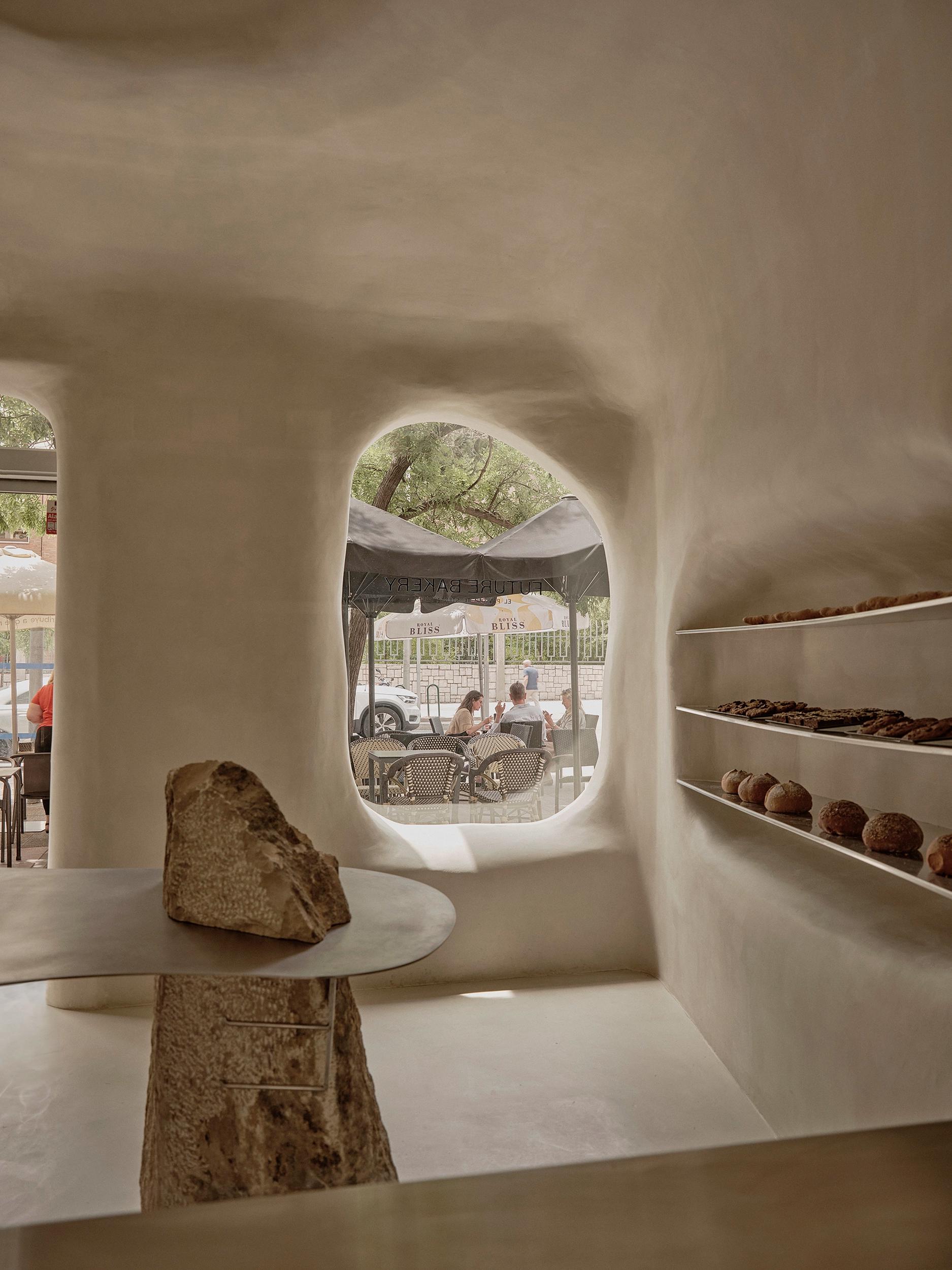
Thus, the concept was developed in the following way: The container—that is, the physical space—was conceived as a simultaneous expression of both origin and future. The notion of “the cave’s skin” emerged as a conceptual synthesis: a space inspired by the ancestral and prehistoric, but articulated through a futuristic, contemporary, and almost surreal aesthetic.
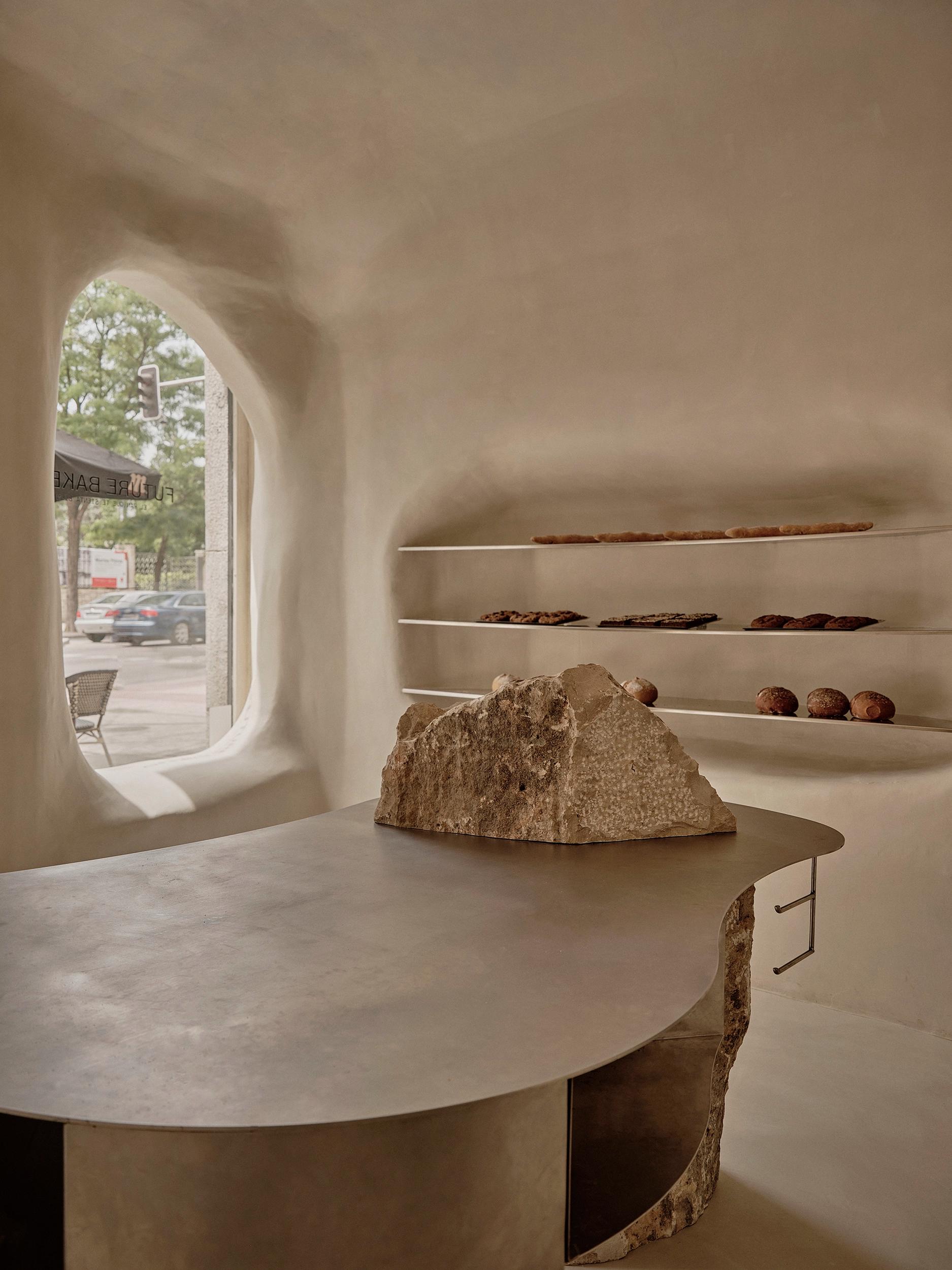
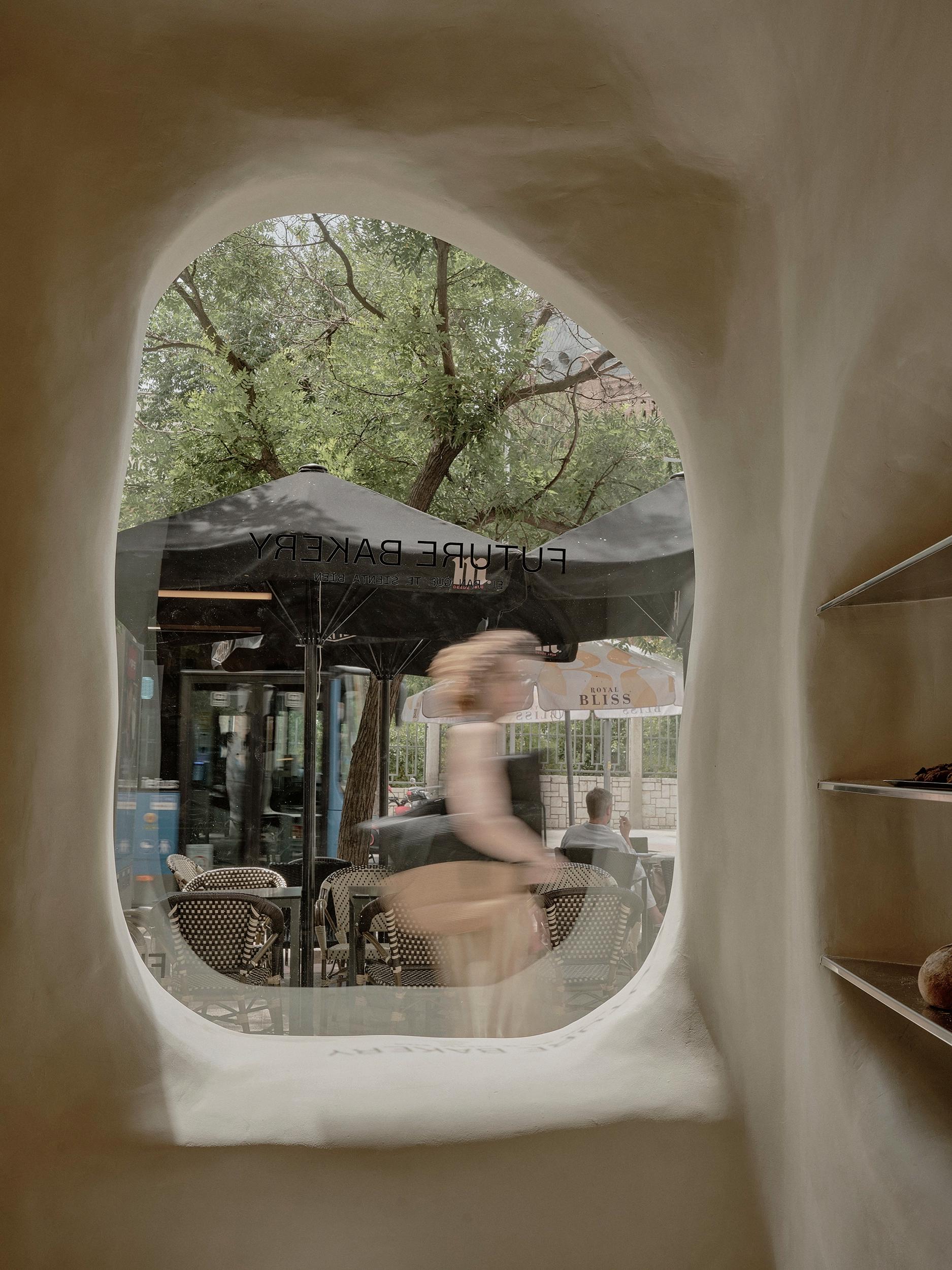
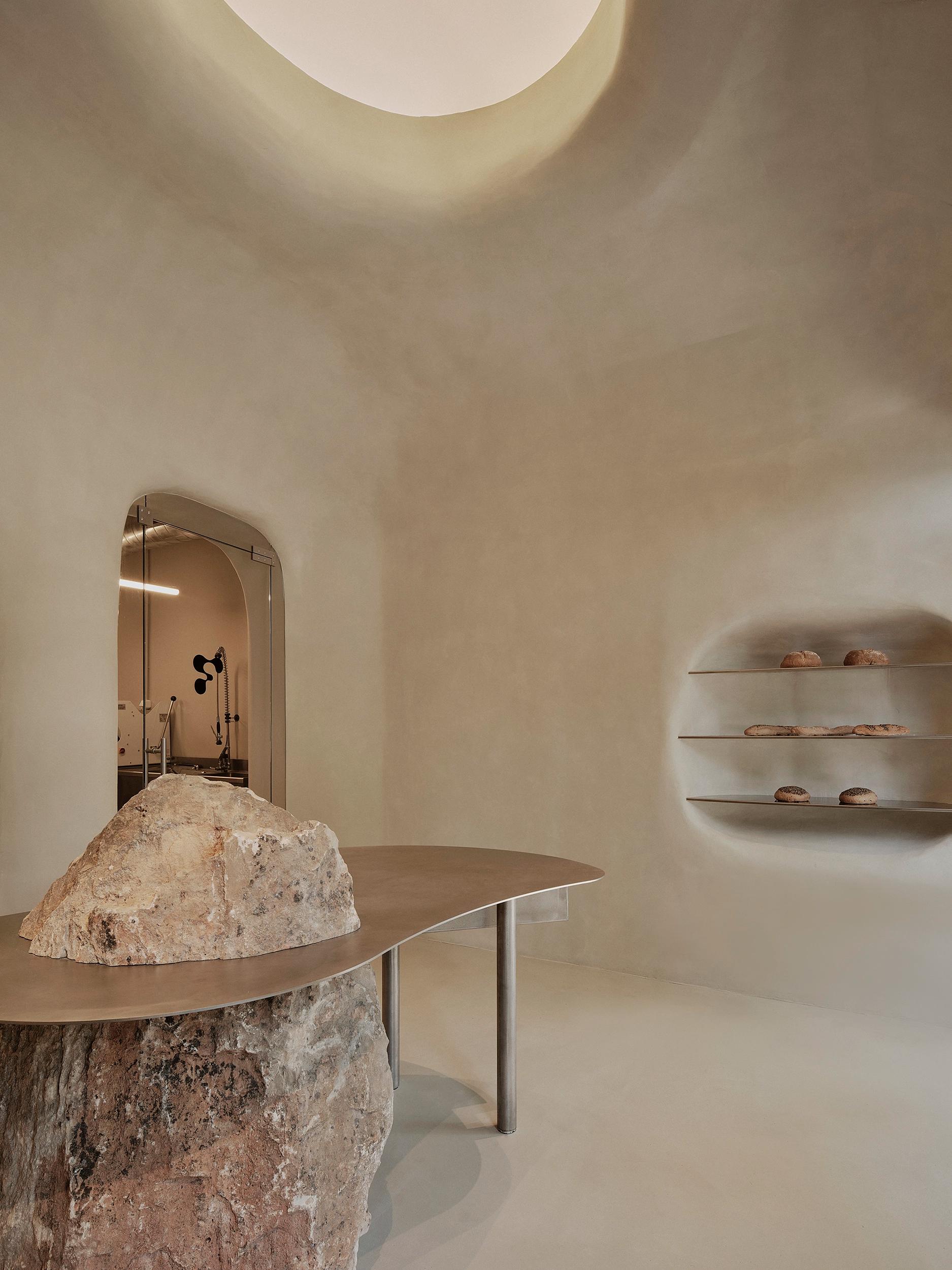
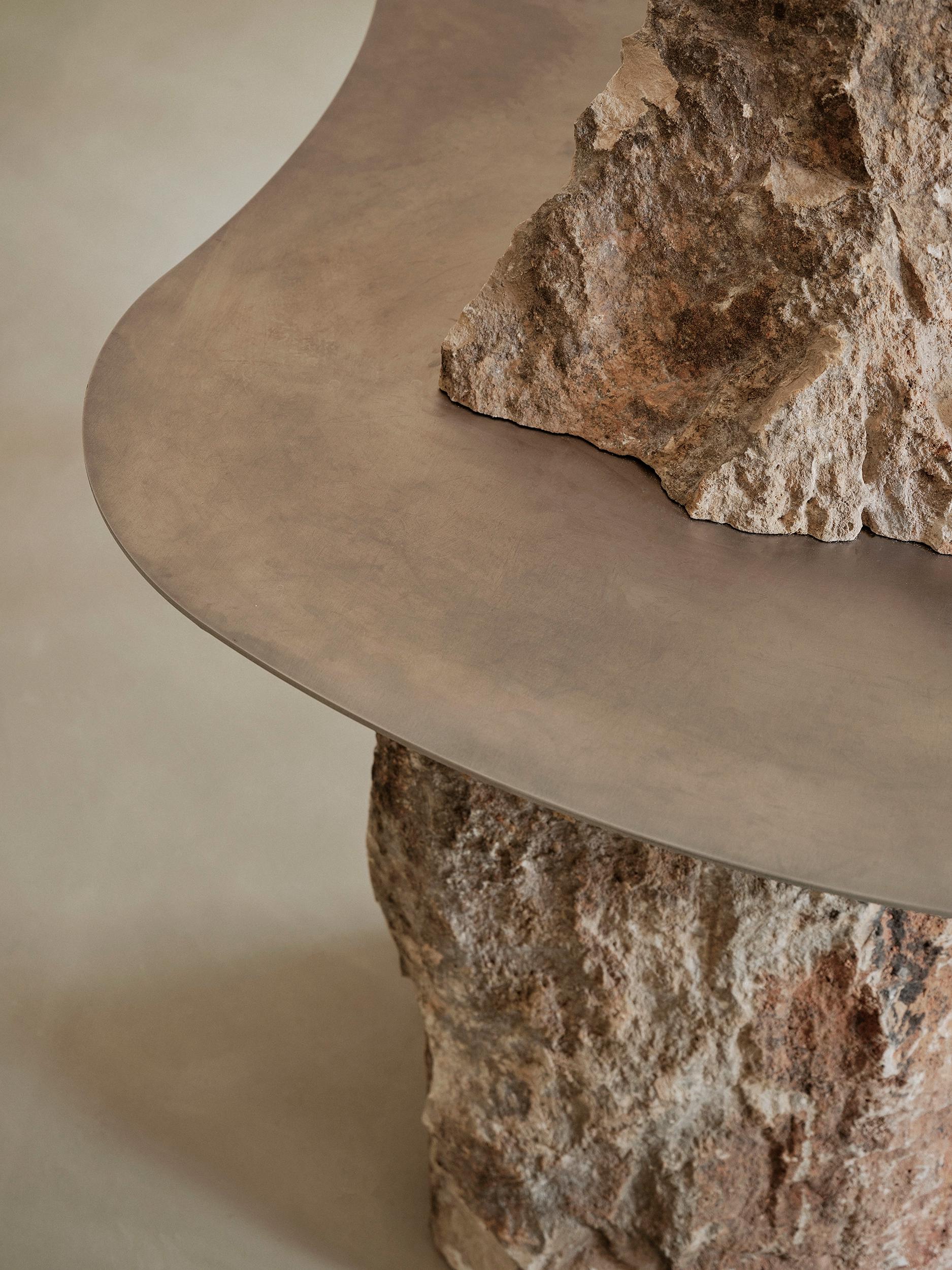
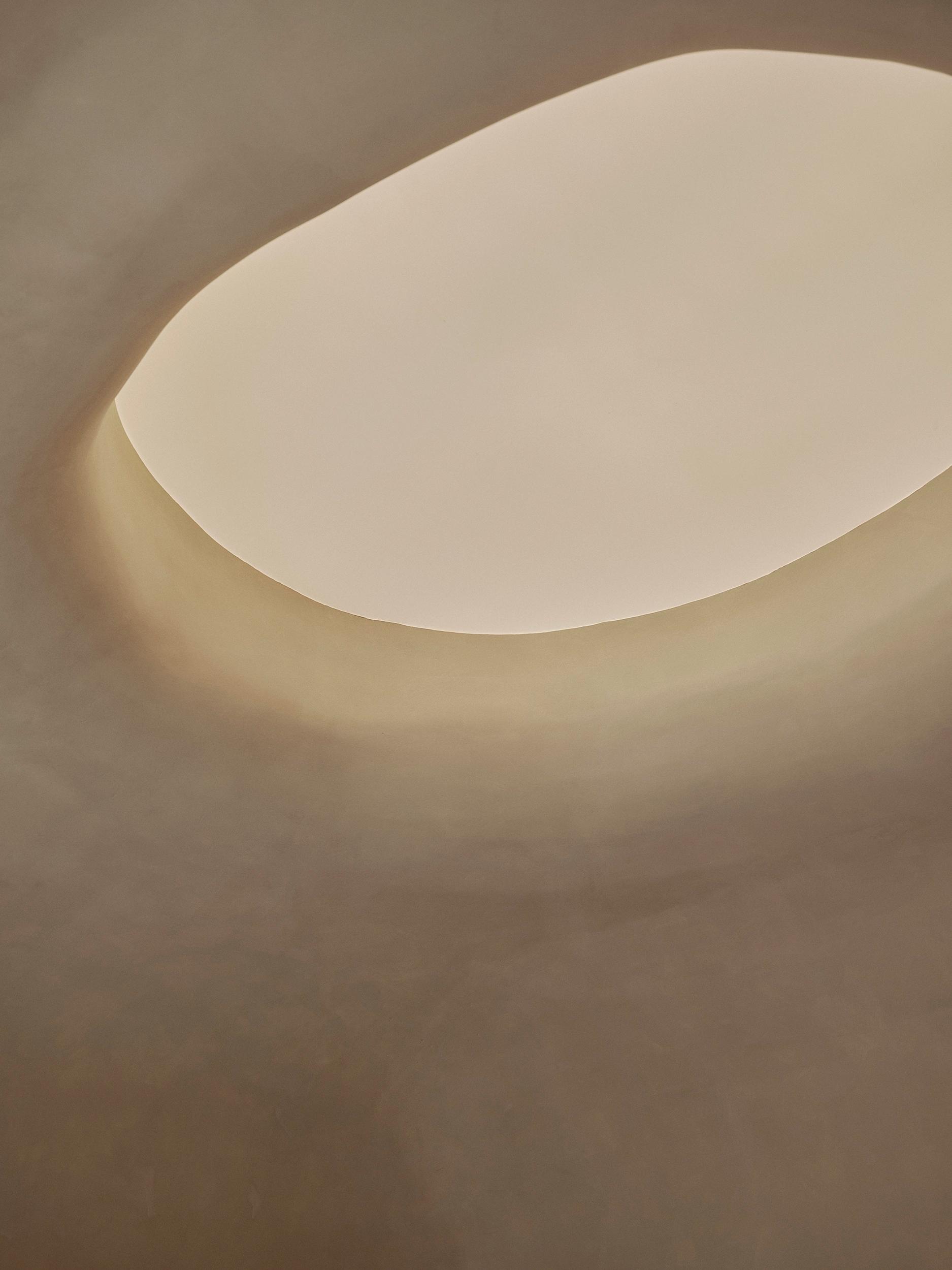
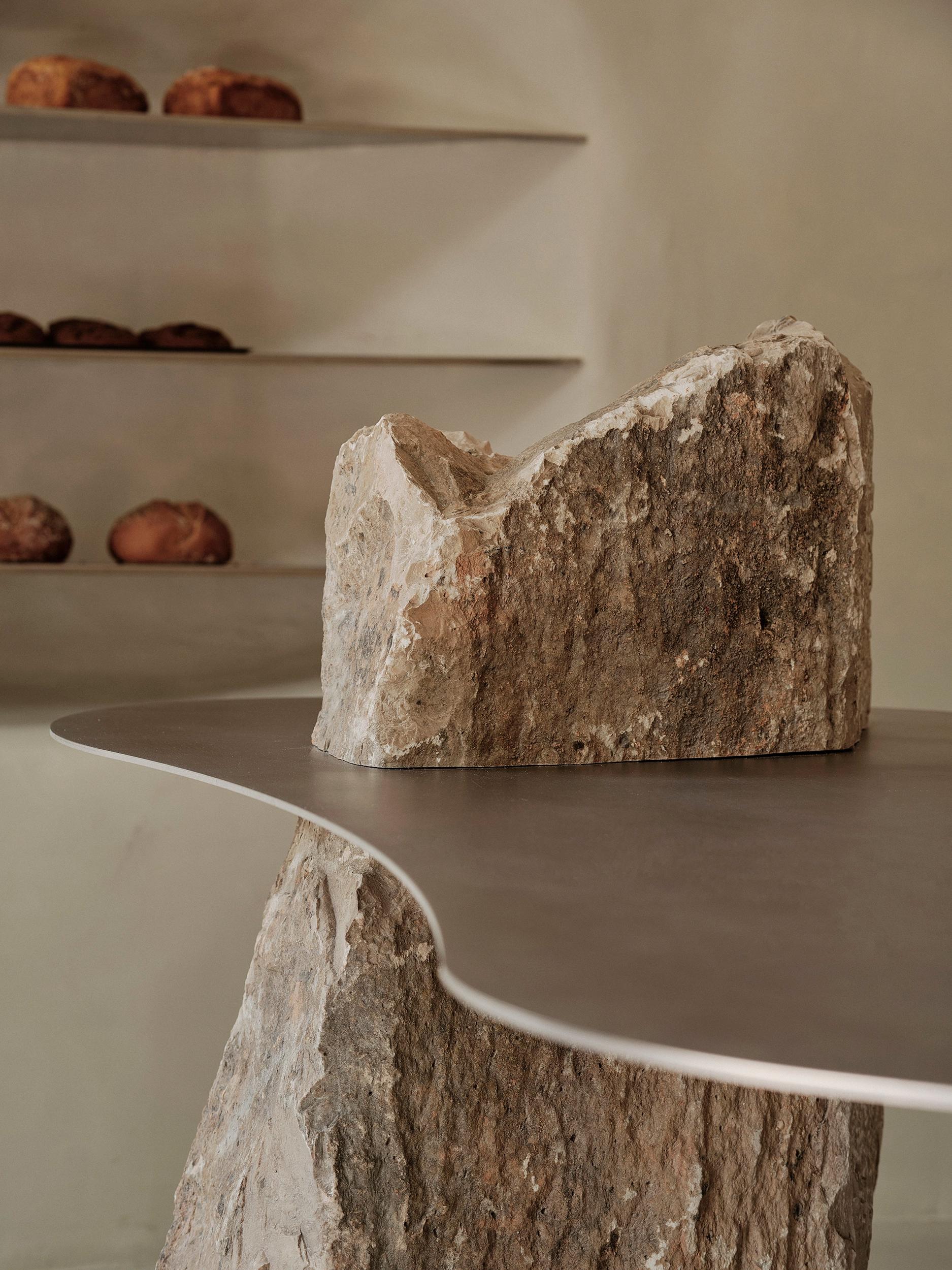
In contrast, the content—the materials and interior elements—was envisioned as a fusion of the two worlds. For instance, stainless steel alludes to technology and futurism, while natural stone evokes the primal and organic. The skylight serves as a convergence point between the natural, the ethereal, and the modern—bringing in natural light while creating an almost magical atmosphere. Ultimately, the interplay between origin and future resulted in a rich and compelling contrast that defines both the visual identity and spatial experience of the project.
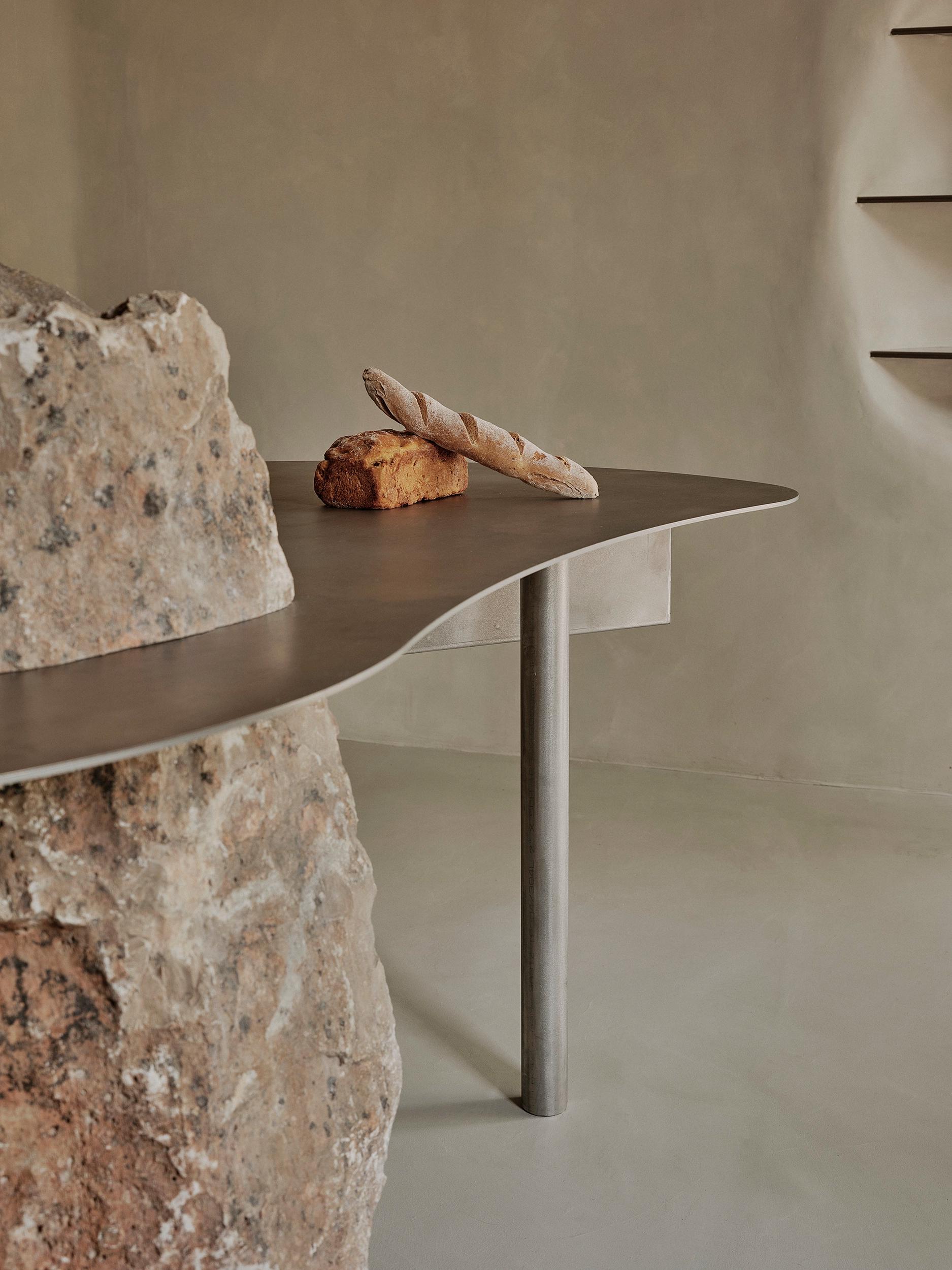
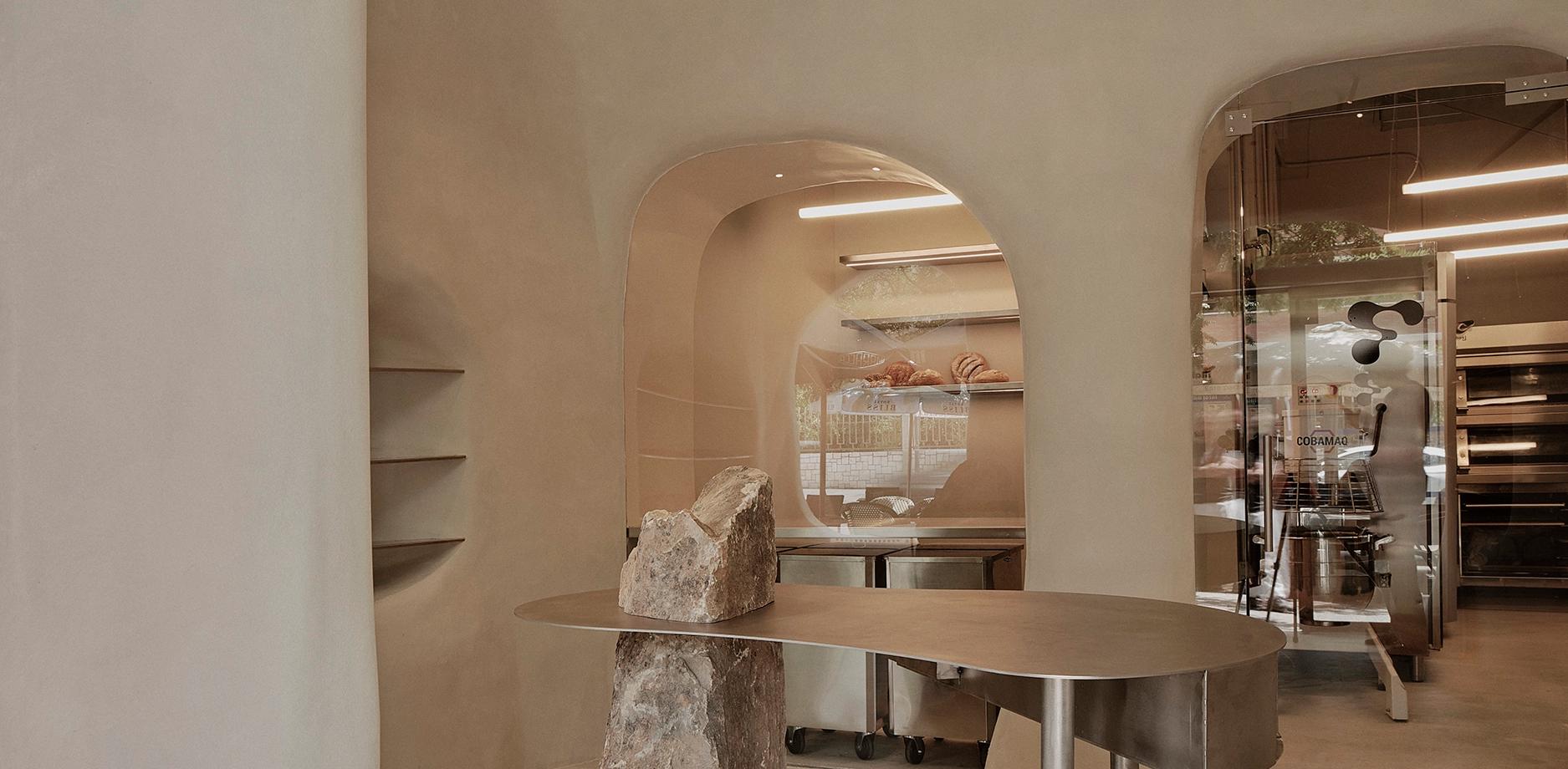
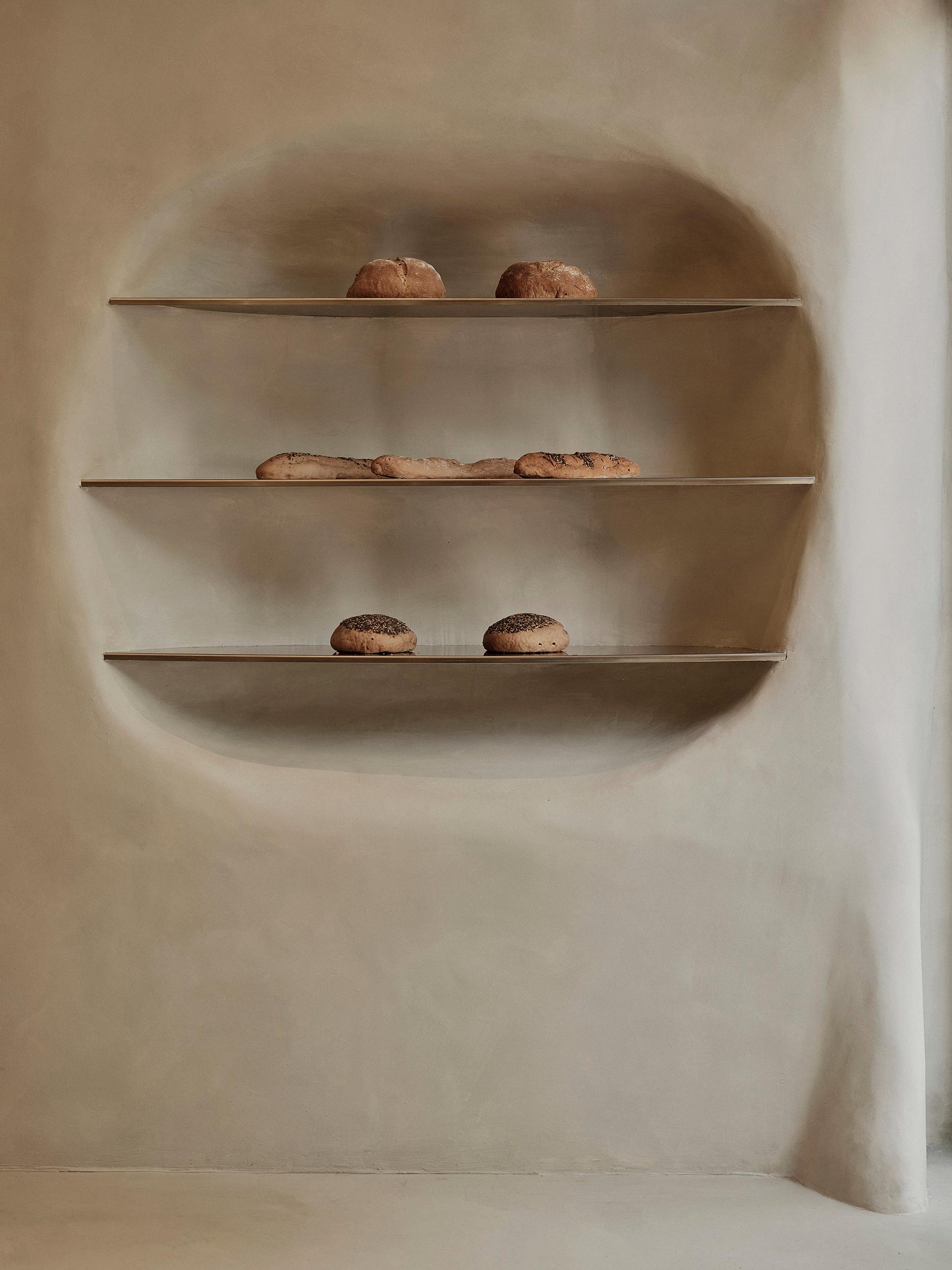
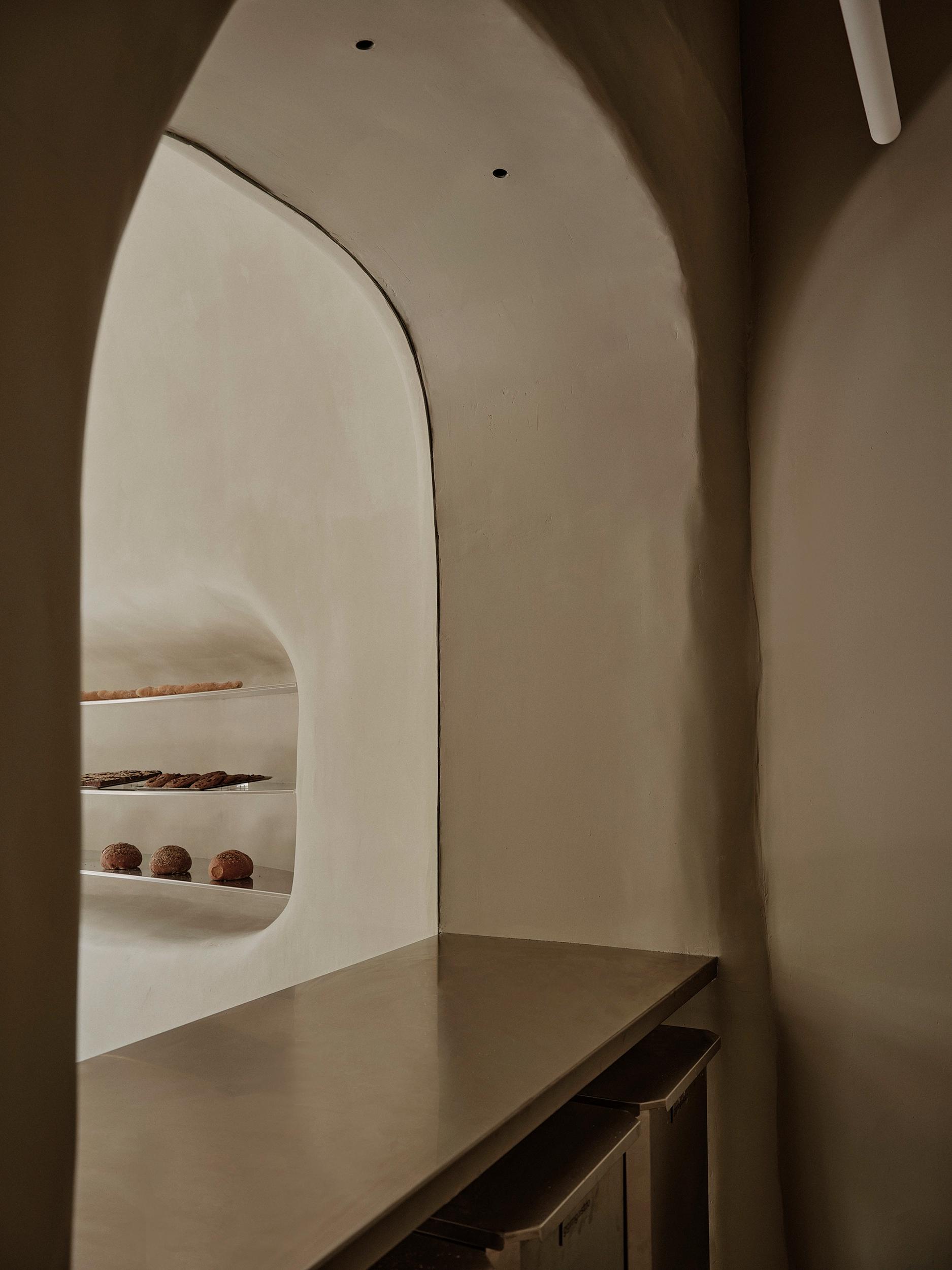
The space is anchored by an organically shaped stainless steel table, illuminated by a large lightbox embedded in the ceiling. This central feature is enveloped within a continuous architectural shell that merges ceiling and walls through a system of curved forms crafted in plasterboard—creating a cohesive “skin” that wraps the entire retail area. On either side of the space, curved niches adapt fluidly to the morphology of the environment, serving as display areas where bread is presented on stainless steel shelving.
The retail area seamlessly connects with the production workshop through a series of organic arches, enabling a fluid spatial transition. Within this workshop—all products are crafted on-site—customers can observe the entire preparation process in real time, thereby reinforcing the project’s core principle of transparency.
Every curve, texture, and source of light has been meticulously designed to embody a dialogue between the ancestral and the futuristic. FU.BA is not merely a place to shop—it is an experiential environment conceived to bridge tradition and innovation.
AUTHOR
ISERN SERRA
TEAM LEADER
ARAN ESCUDERO
PHOTOGRAPHY
DAVID ZARZOSO