The Grupo La Confitería wants Tuset Street, Barcelona, to shine again as it did in other times. For this reason, its creators, Lito Baldovinos and Enric Rebordosa, have initiated an ambitious plan of openings of new establishments with the intention of returning to this street its former glamour. A plan that has started with the inauguration of Focacha, at number 17.
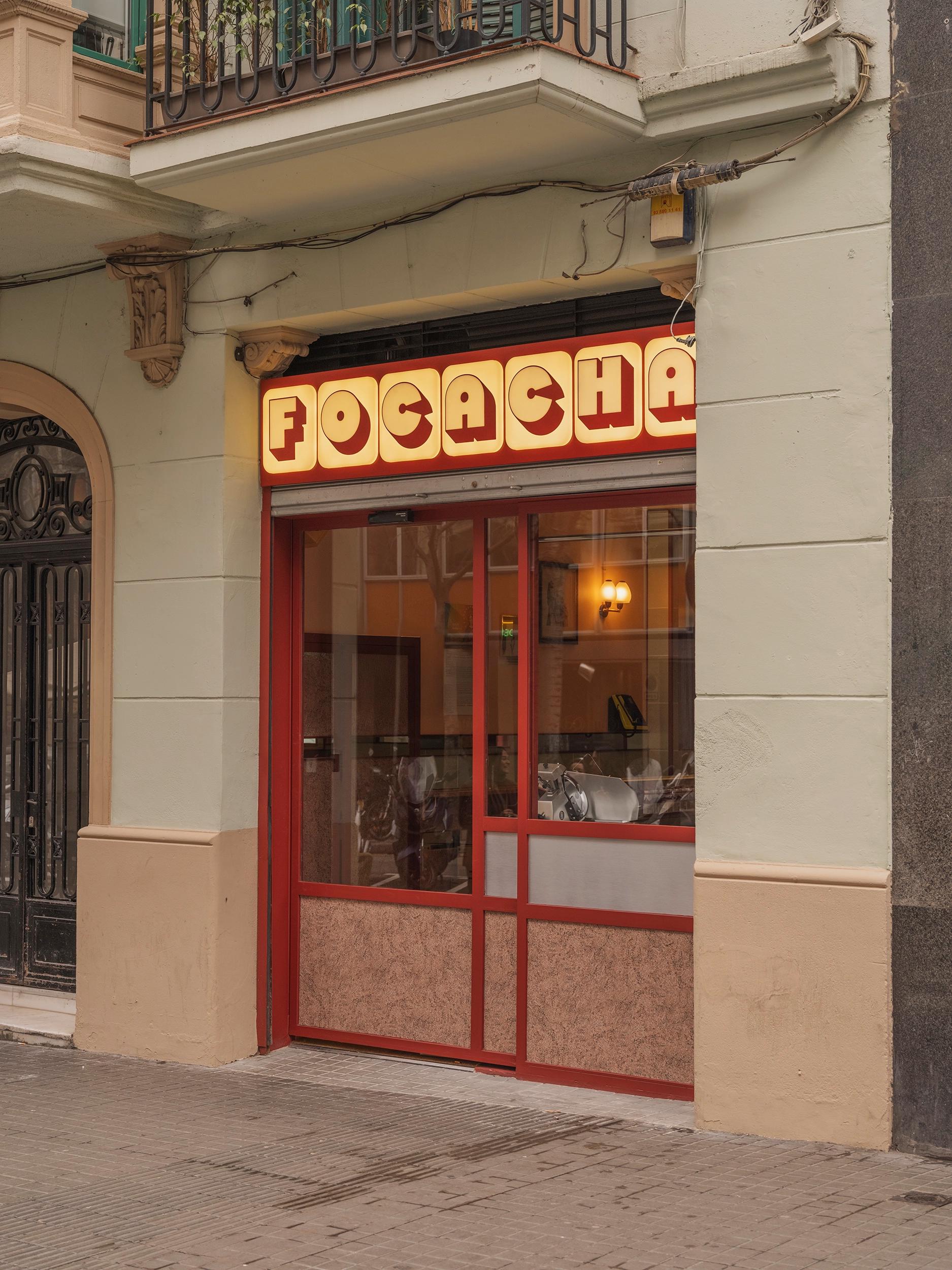
Hidden behind a focaccería (hence its name, in addition to the wordplay with Bocaccio), this impressive cocktail bar pays homage to the “gauche divine,” the group of progressive young liberal professionals in the Barcelona of the 60s and 70s, and to the longed-for Catalan businessman Oriol Regàs, king of the Barcelona night and soul of the emblematic Bocaccio nightclub on Muntaner Street.
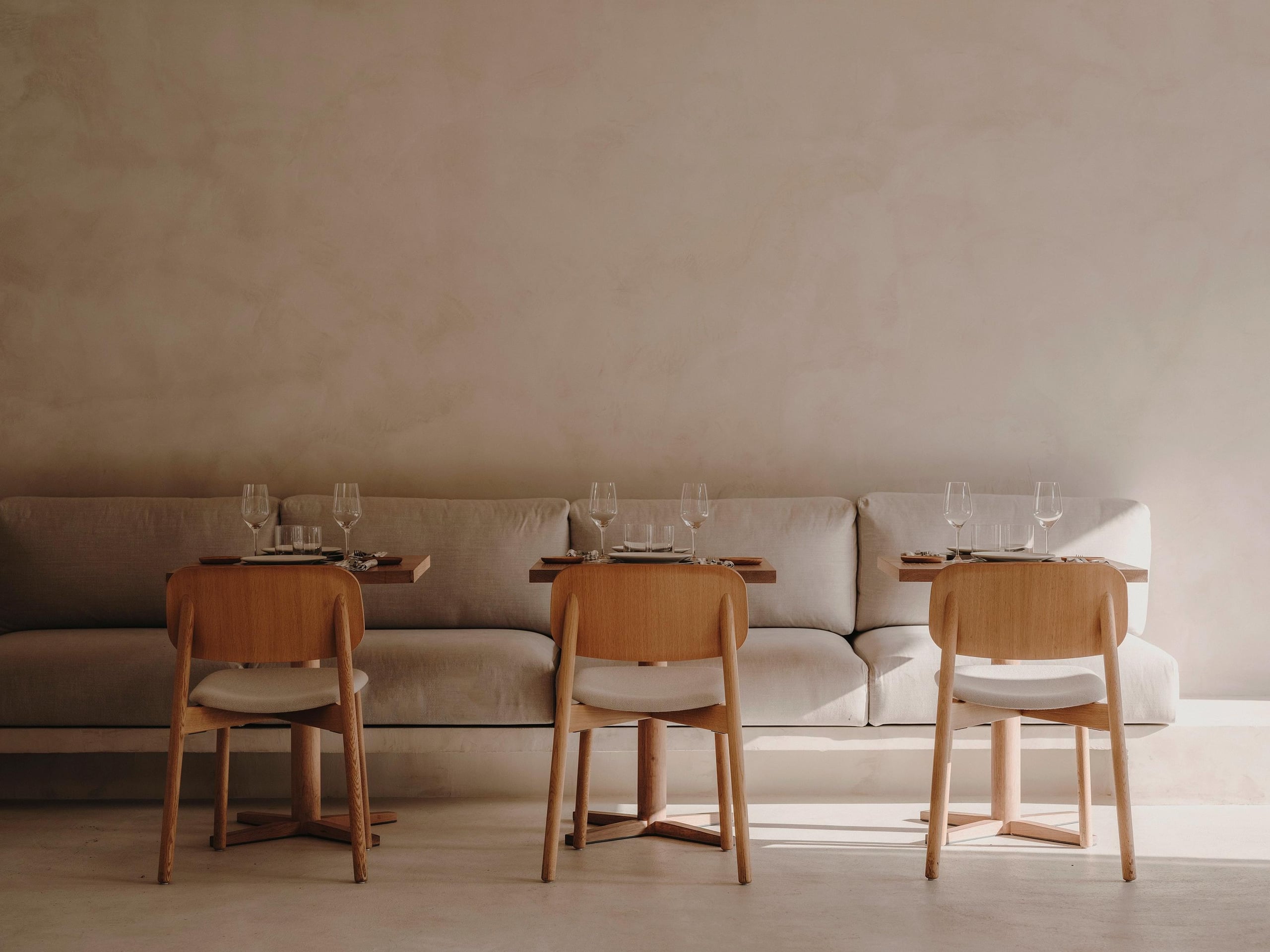
This cocktail project is presented as a speakeasy hidden behind the facade of a picturesque focaccia local designed by Pichy Glass. Its aesthetic evokes the charm of the classic bars of a lifetime, but in its interior, it hides an innovative and surprising cocktail space. The idea of hiding something extraordinary behind a common appearance generates a sensation of mystery and exclusivity, attracting both design lovers and cocktail enthusiasts. To access this space, visitors must cross a refrigerator inside the focaccia local, which adds a touch of theatricality to the experience.
The interior of the cocktail bar is divided into two main areas, each with a distinct visual and functional identity.
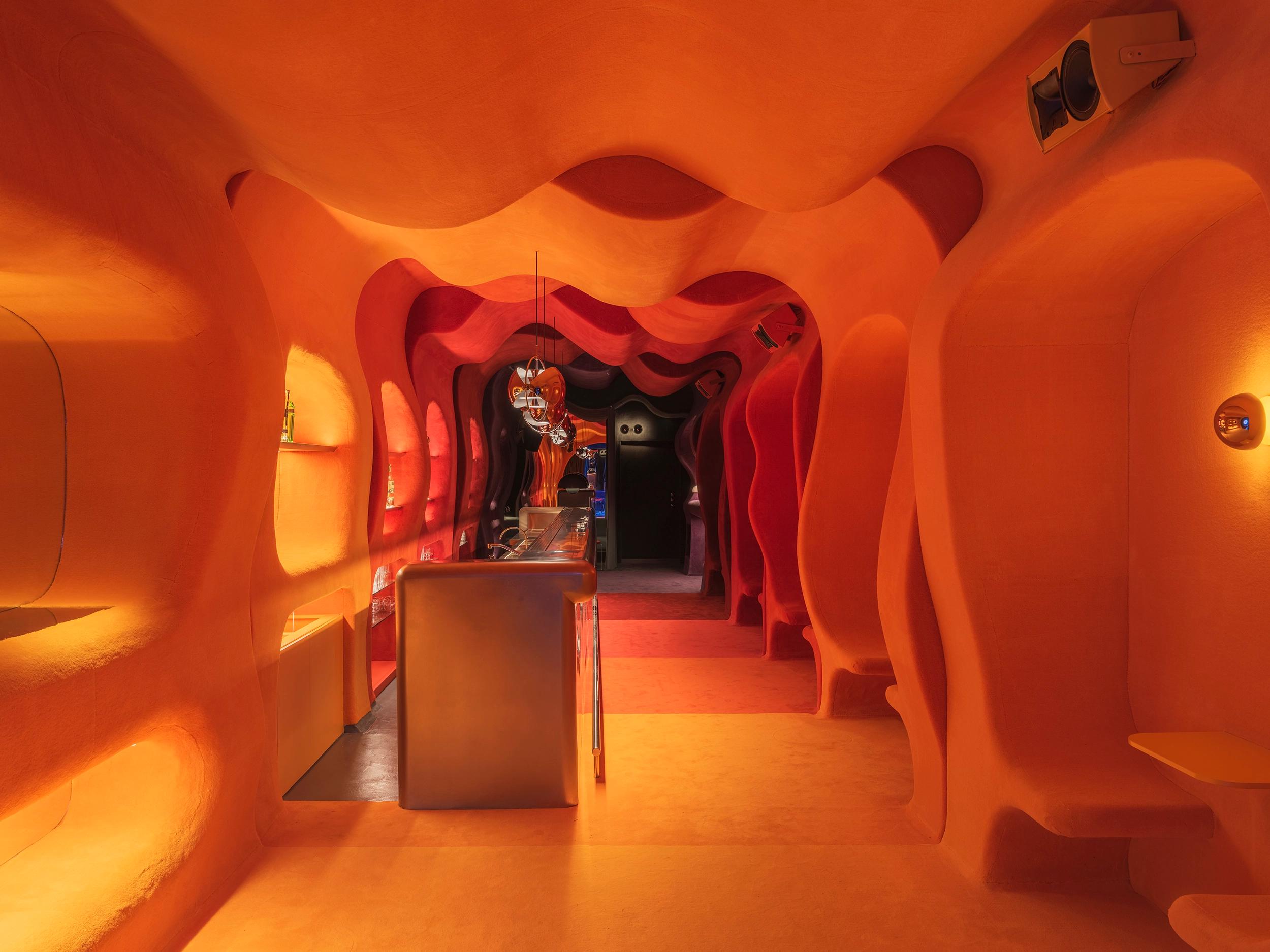
A space that pays homage to the iconic Visiona project by Verner Panton, with its color palette and organic forms, evoking a retro-futuristic design with a playful and sophisticated touch.
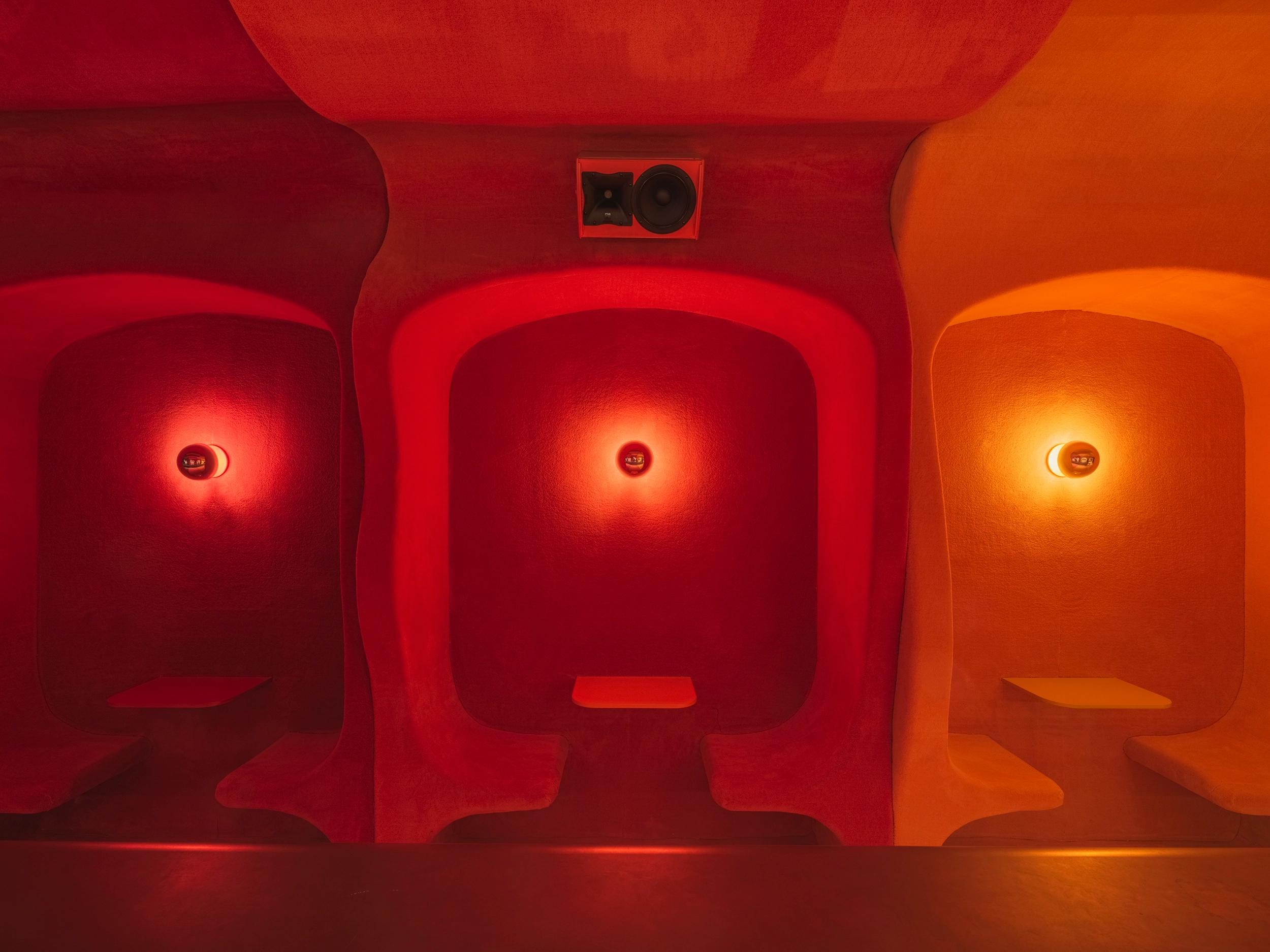
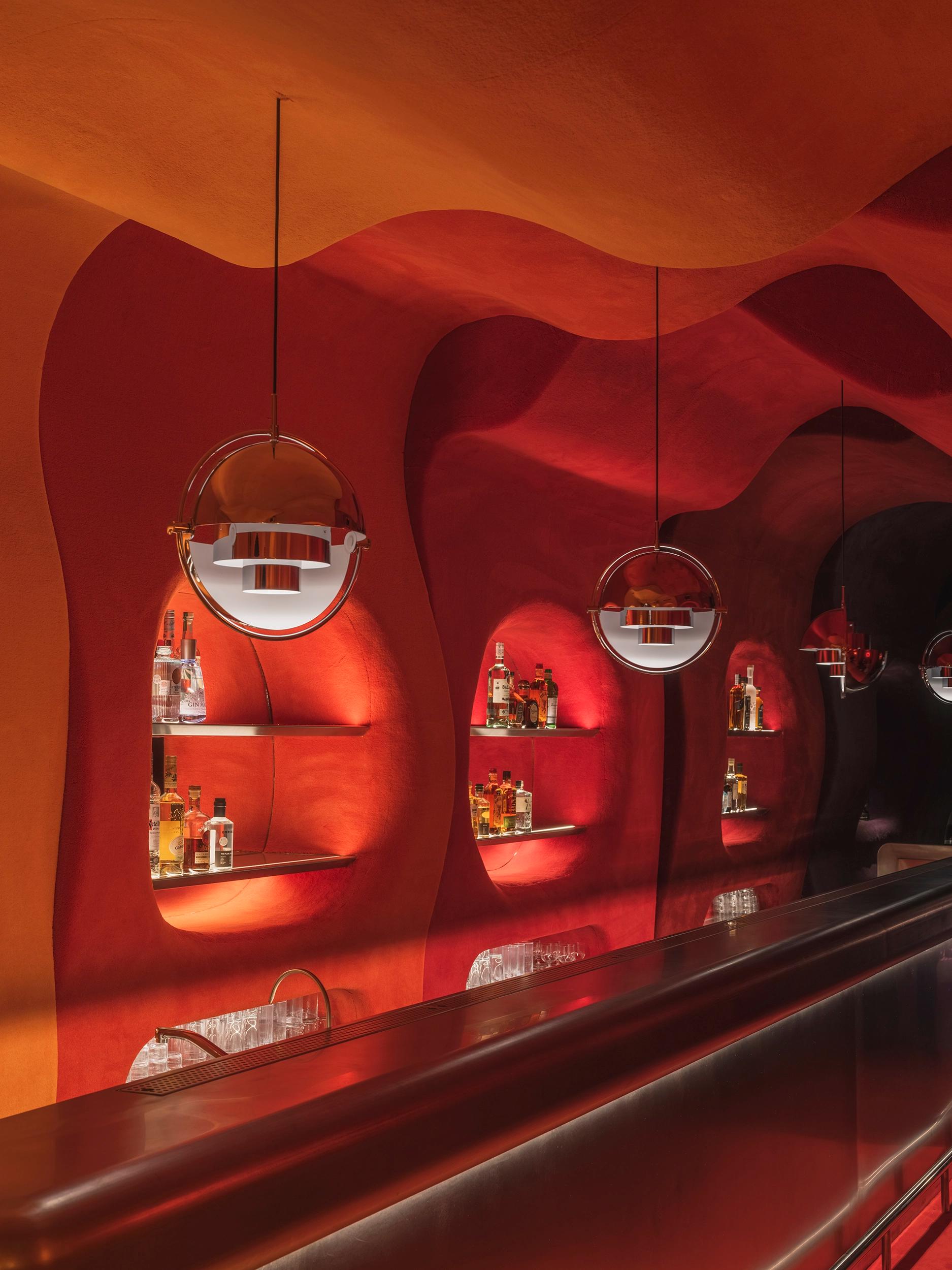
Upon entering, visitors are received by an impressive stainless steel bar with rounded edges, surrounded by a set of seven modules of vibrant colors that go from yellow to blue, passing through red. These colors are reflected subtly in the stainless steel base, providing a dynamic and enveloping energy to the space. The environment is completely covered in carpet on the floor, walls, and ceiling, which intensifies the immersive sensation and provides warmth to the environment. Behind the bar, organic niches with shelves serve as a bottle rack.
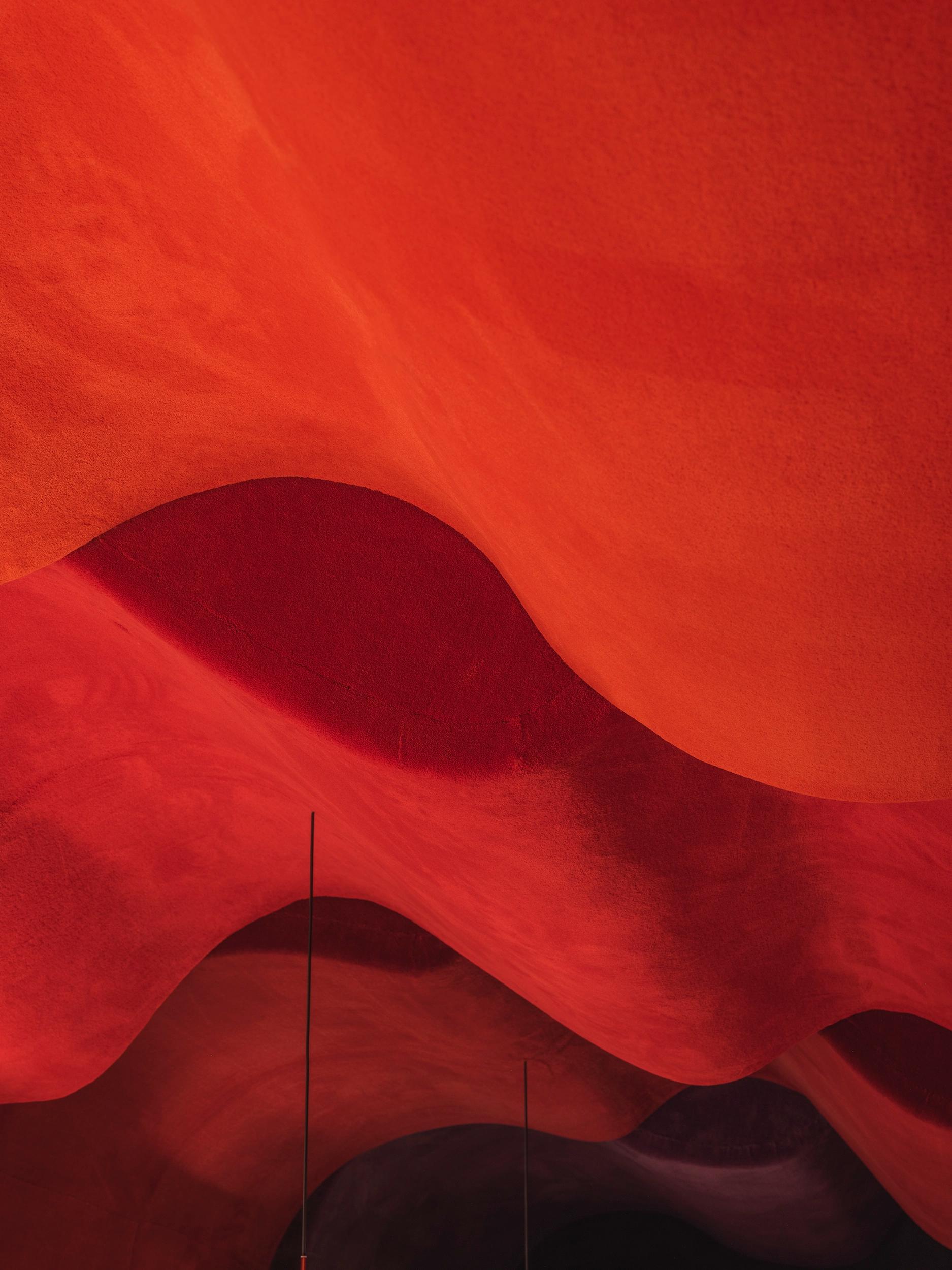
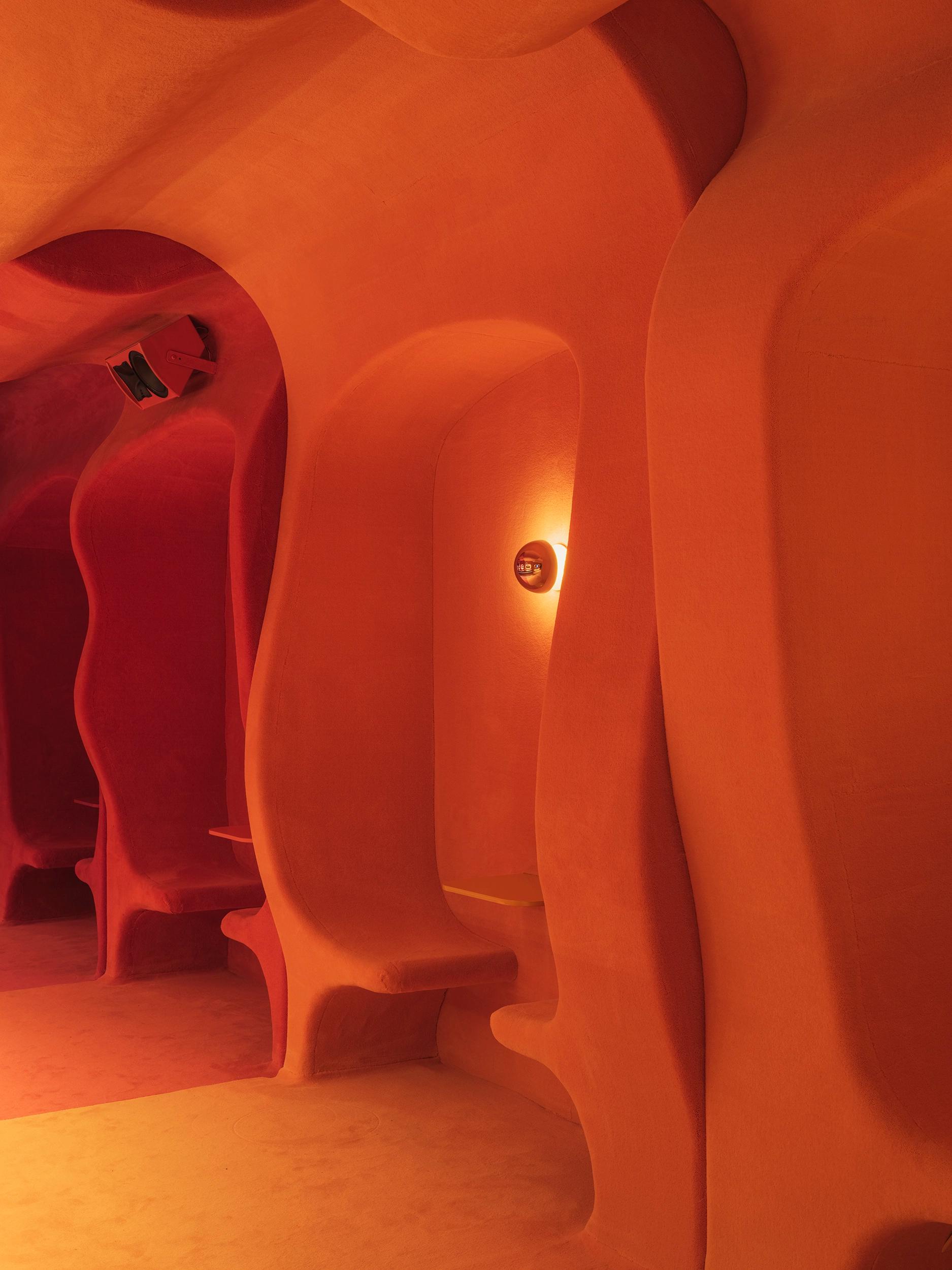
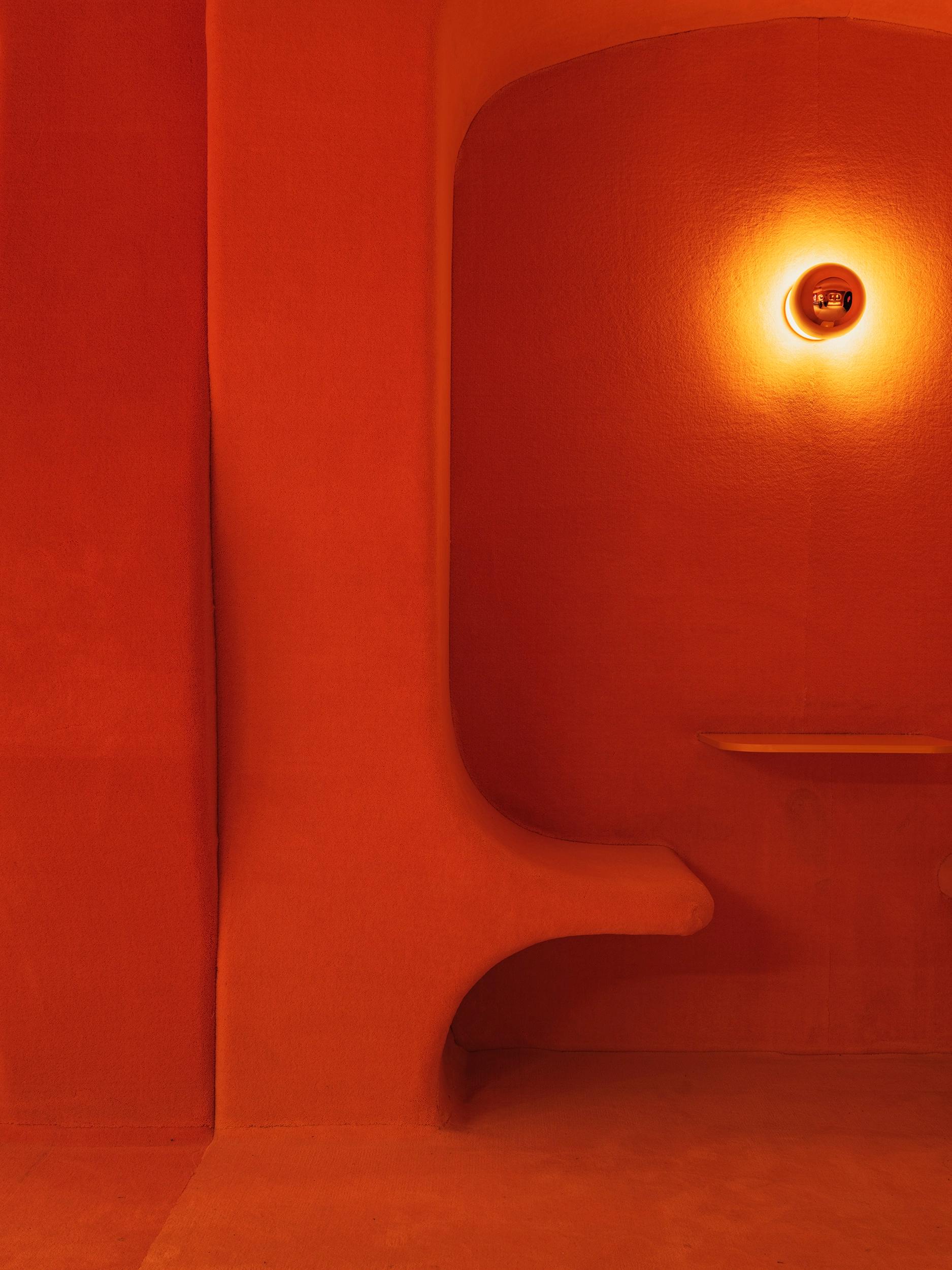
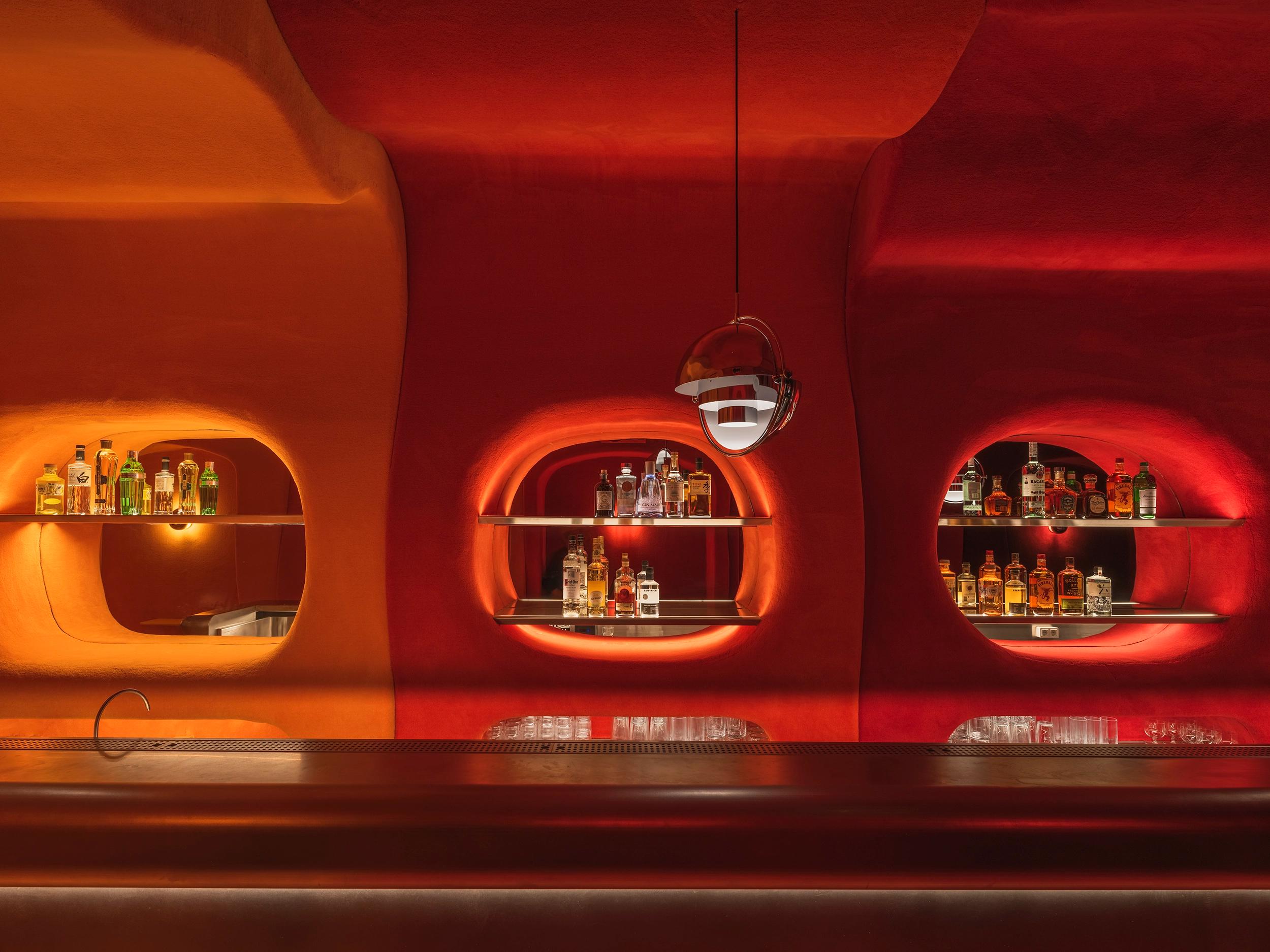
To the left of this room, organic niches provide a more intimate space to enjoy a cocktail with tranquility, while the bar and the modules at the ends foster a more open and shared social experience.
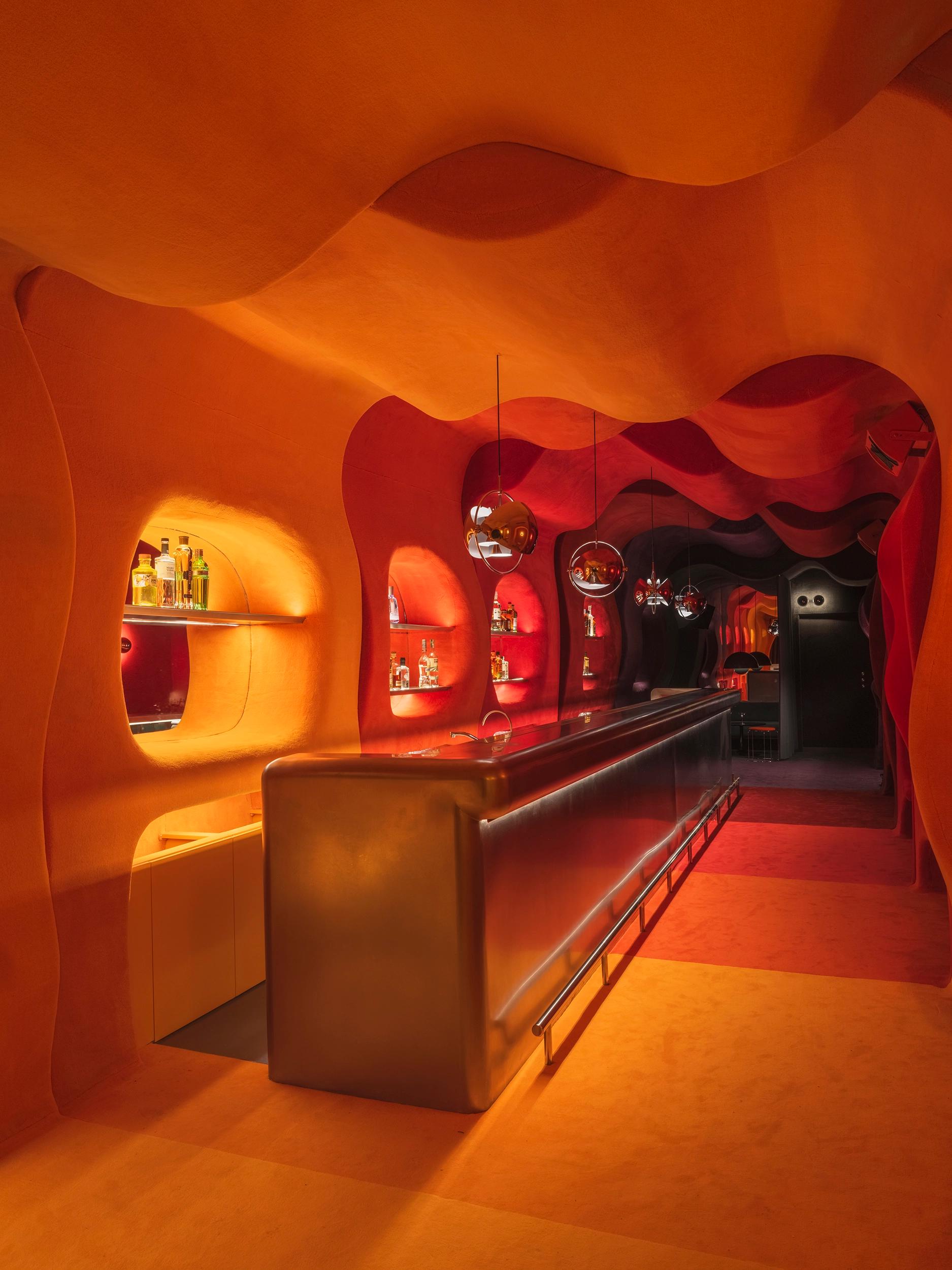
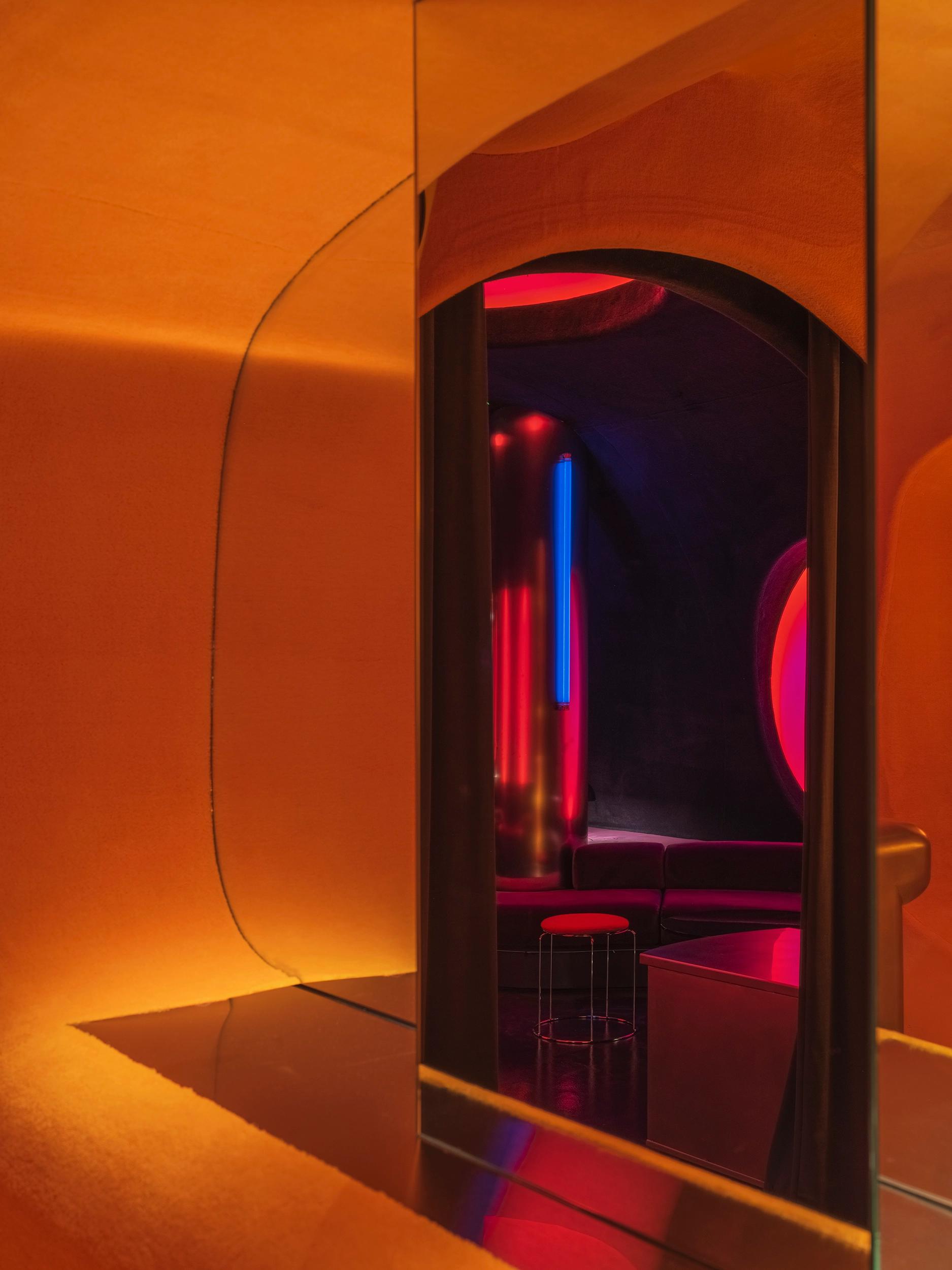
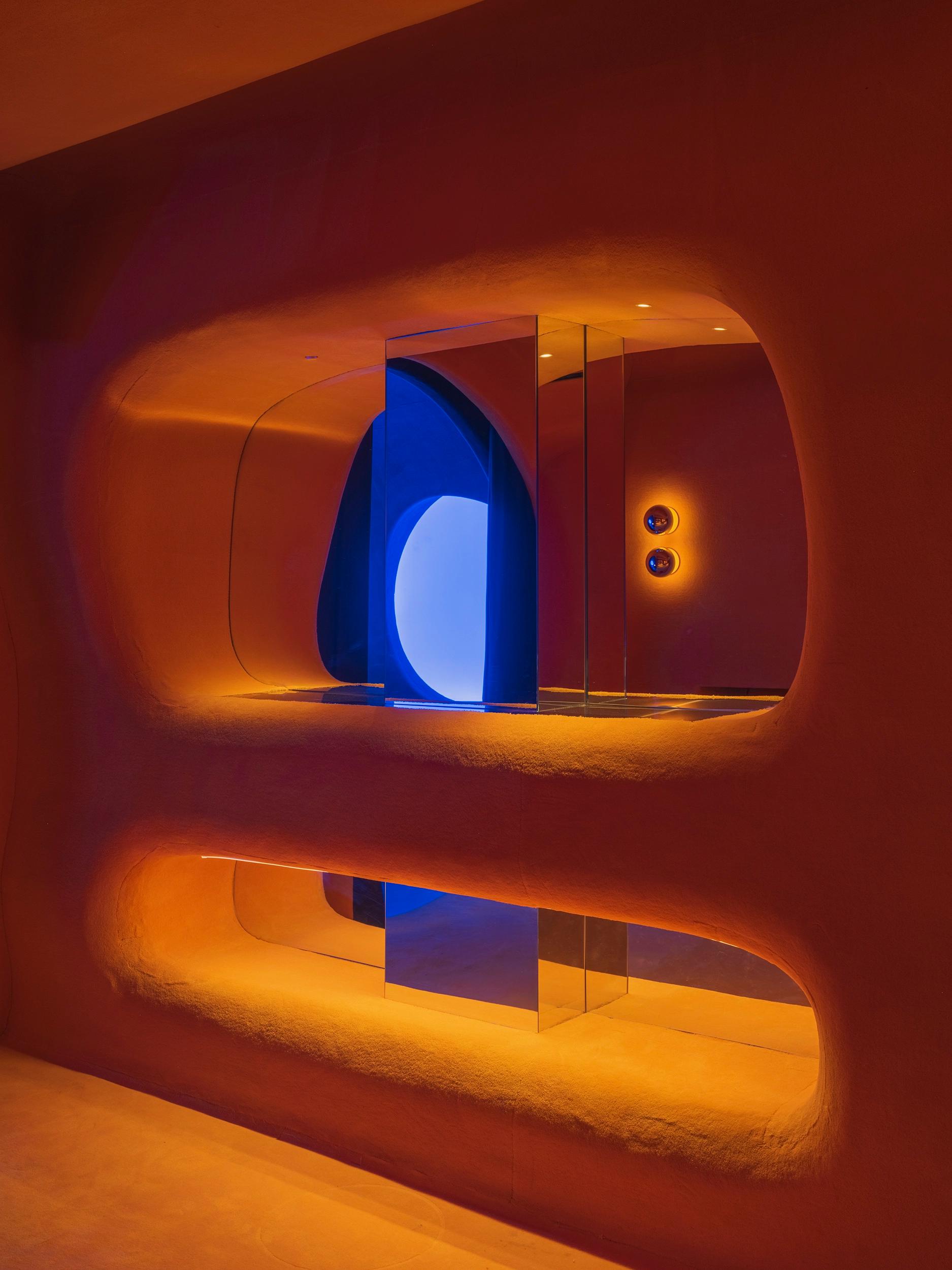
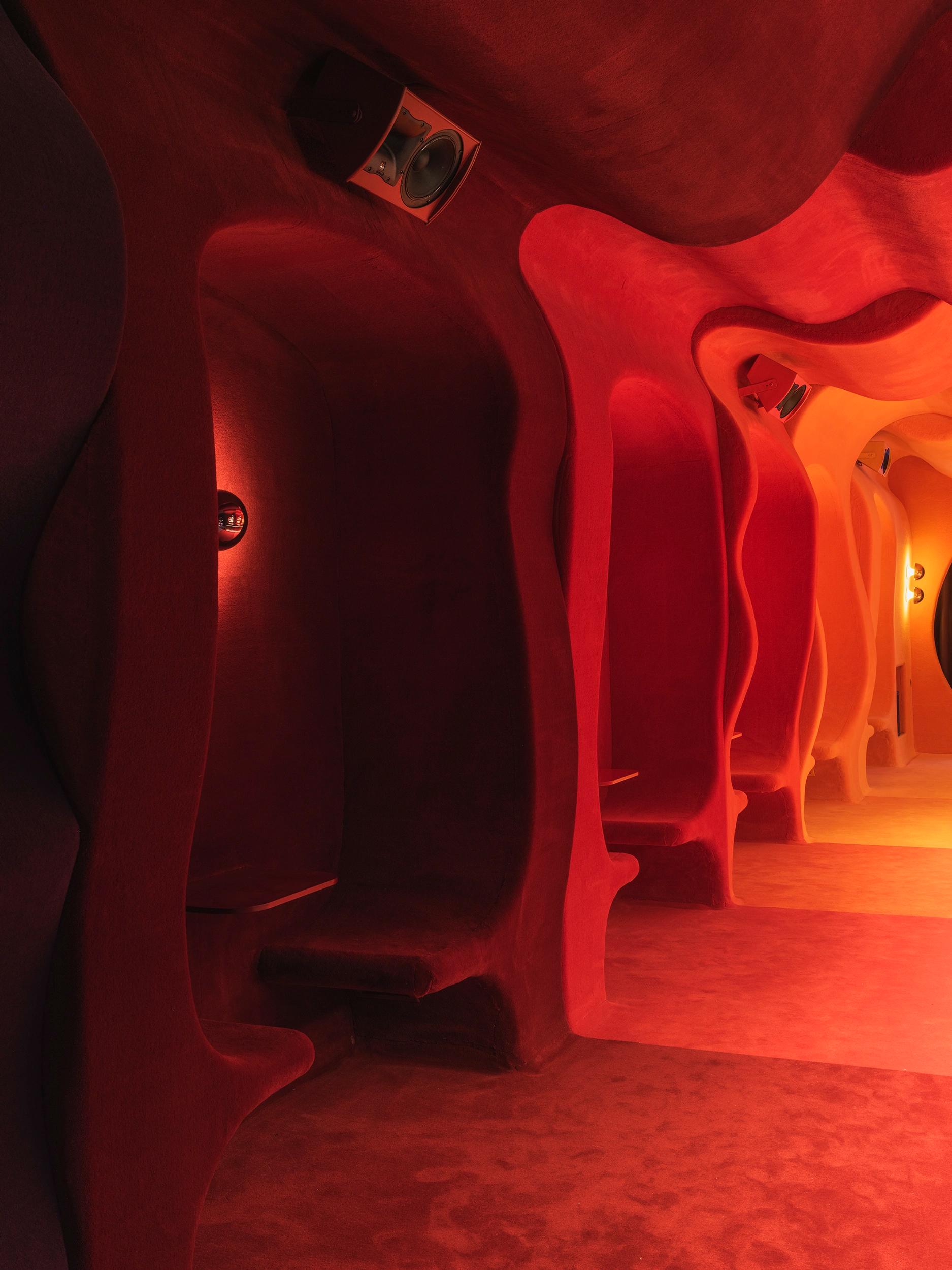
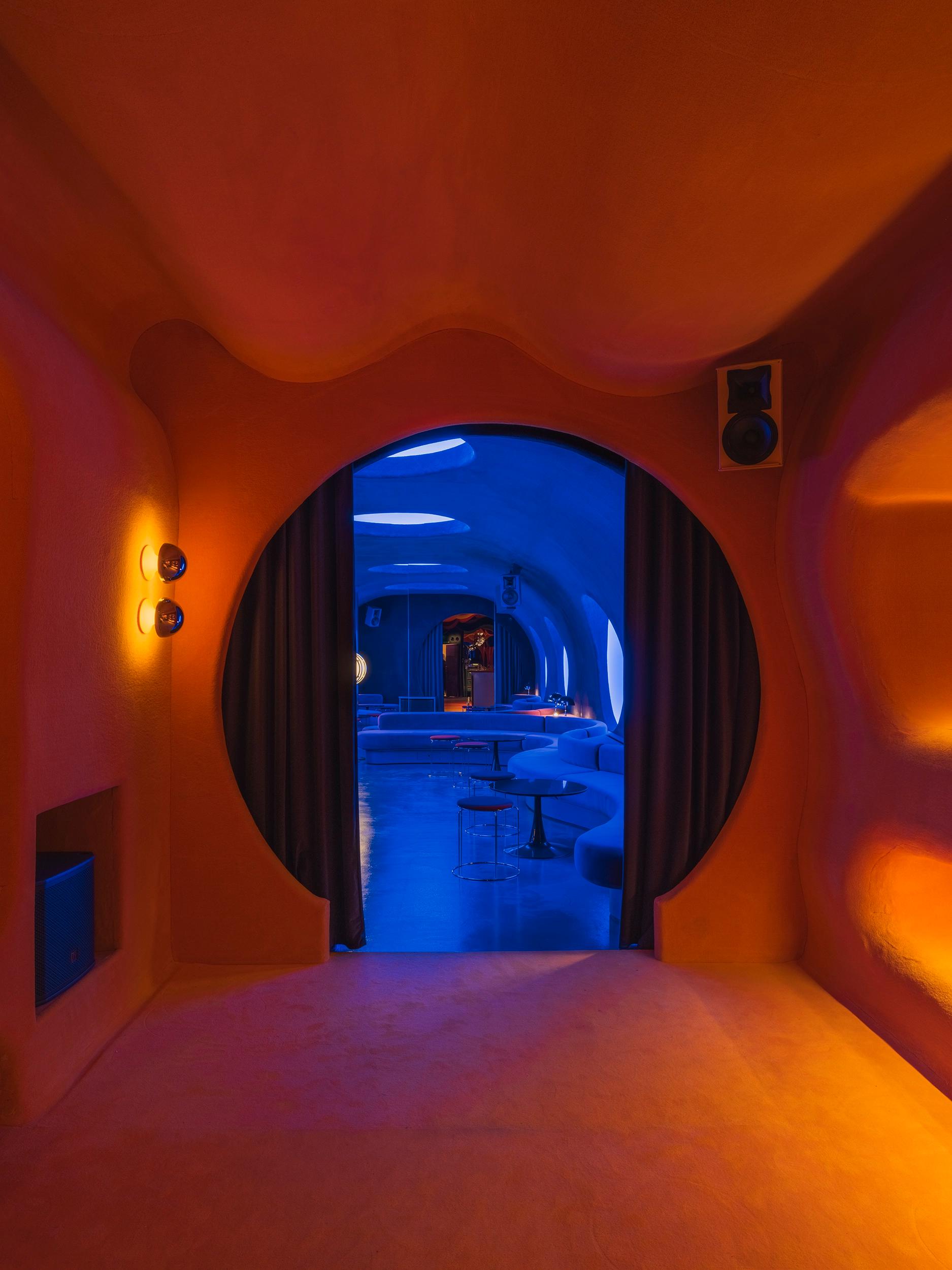
Through a circular opening, one accesses the DJ room, a space with its own identity that transports visitors to an alternative world where the nostalgia of the 60s merges with a vision of a dystopian future. This room encapsulates the essence of retro-futurism, a style that combines the technological optimism of the mid-20th century with a surreal and immersive aesthetic. The organic forms flow throughout the space, evoking the psychedelic and modular interiors of the era, where design served both as functionality and a sensory experience.
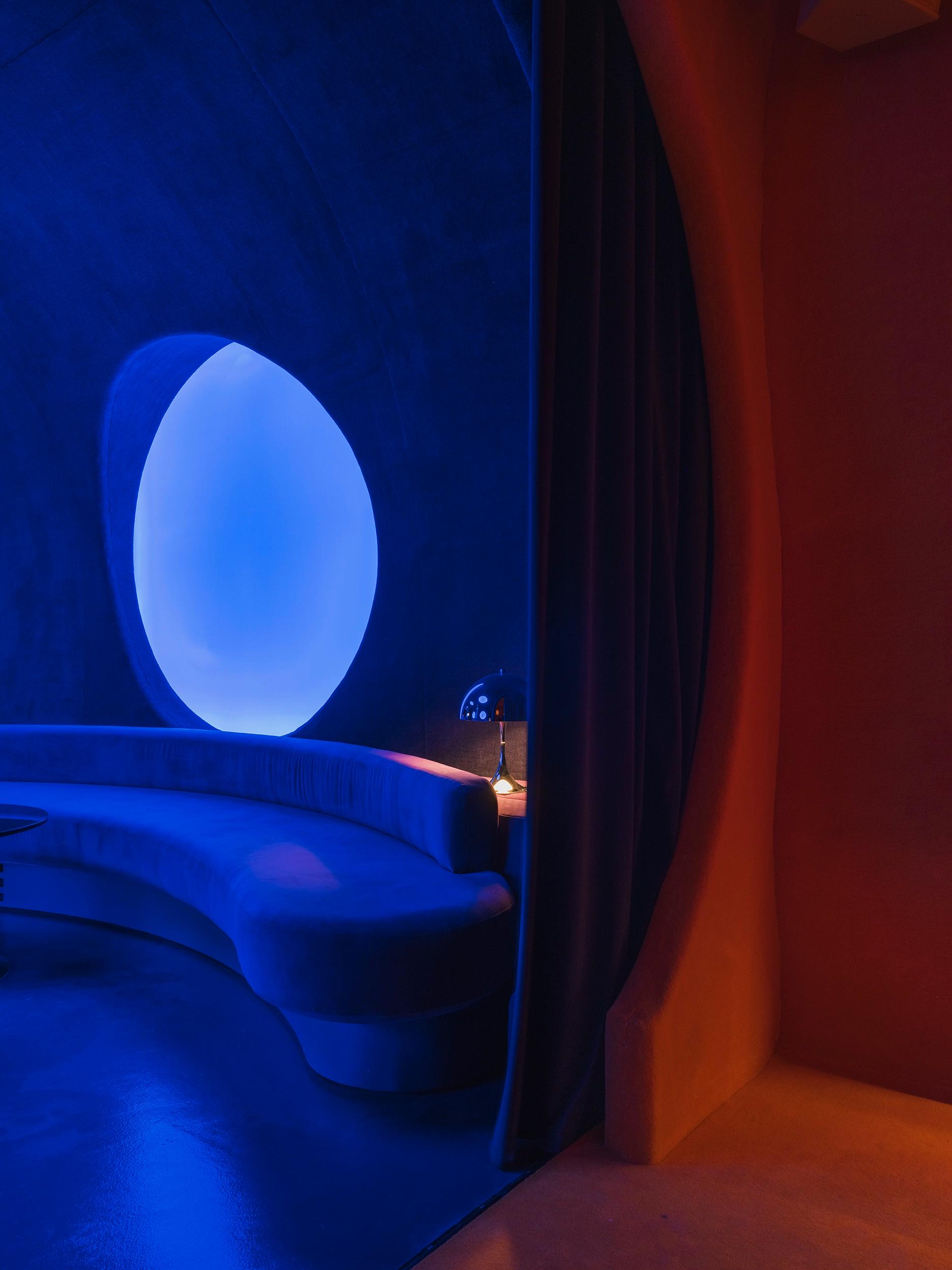
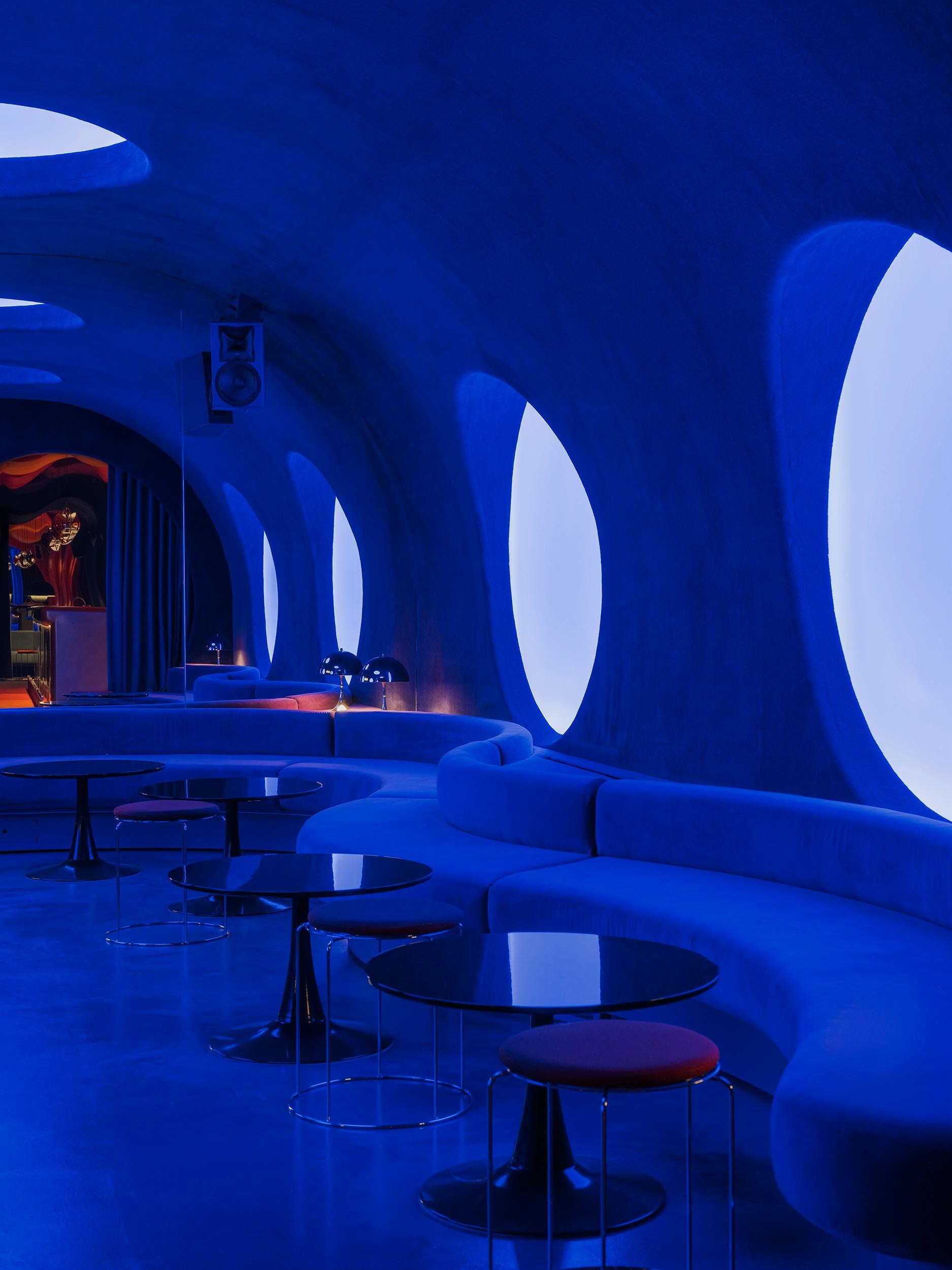
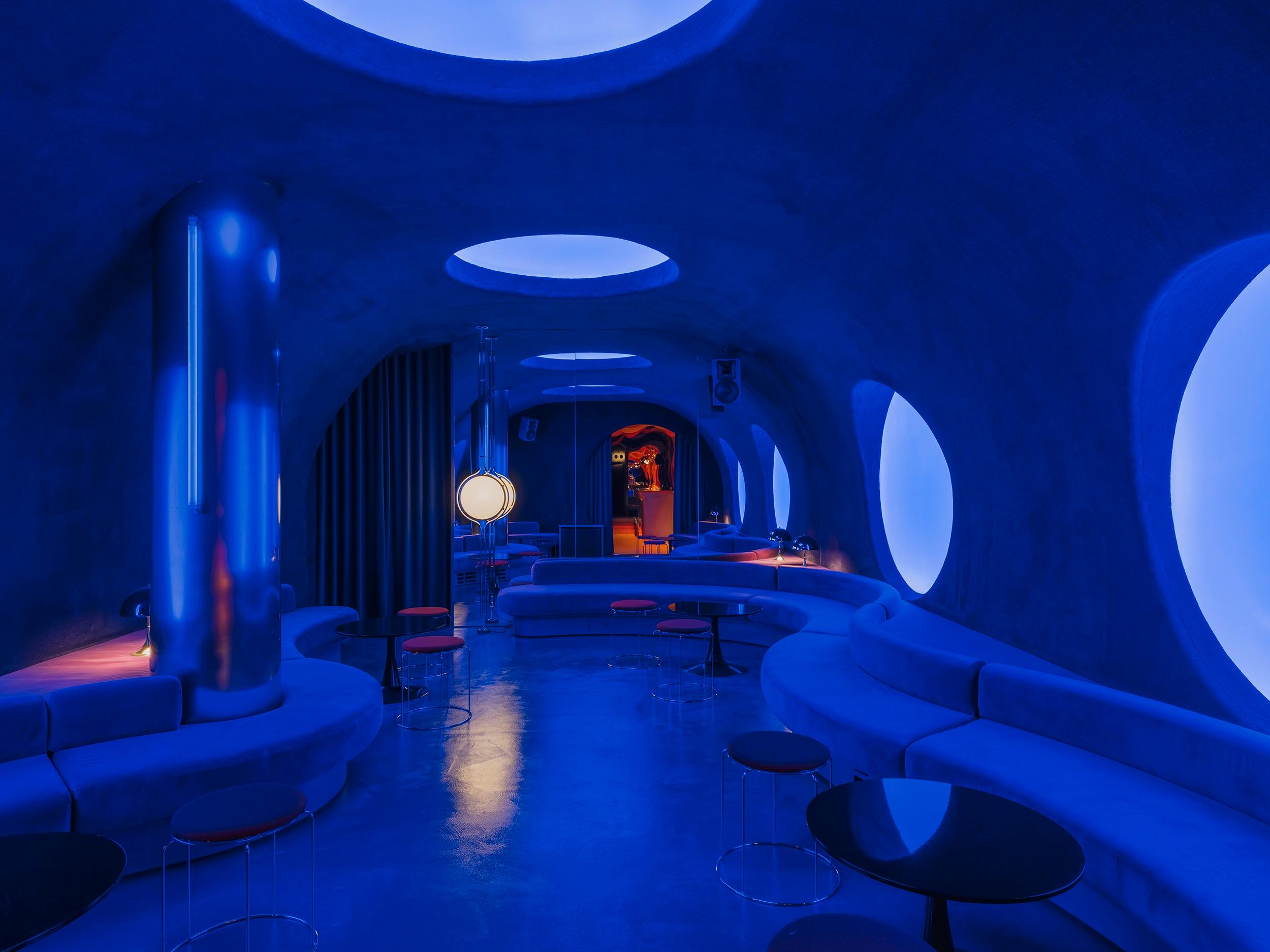
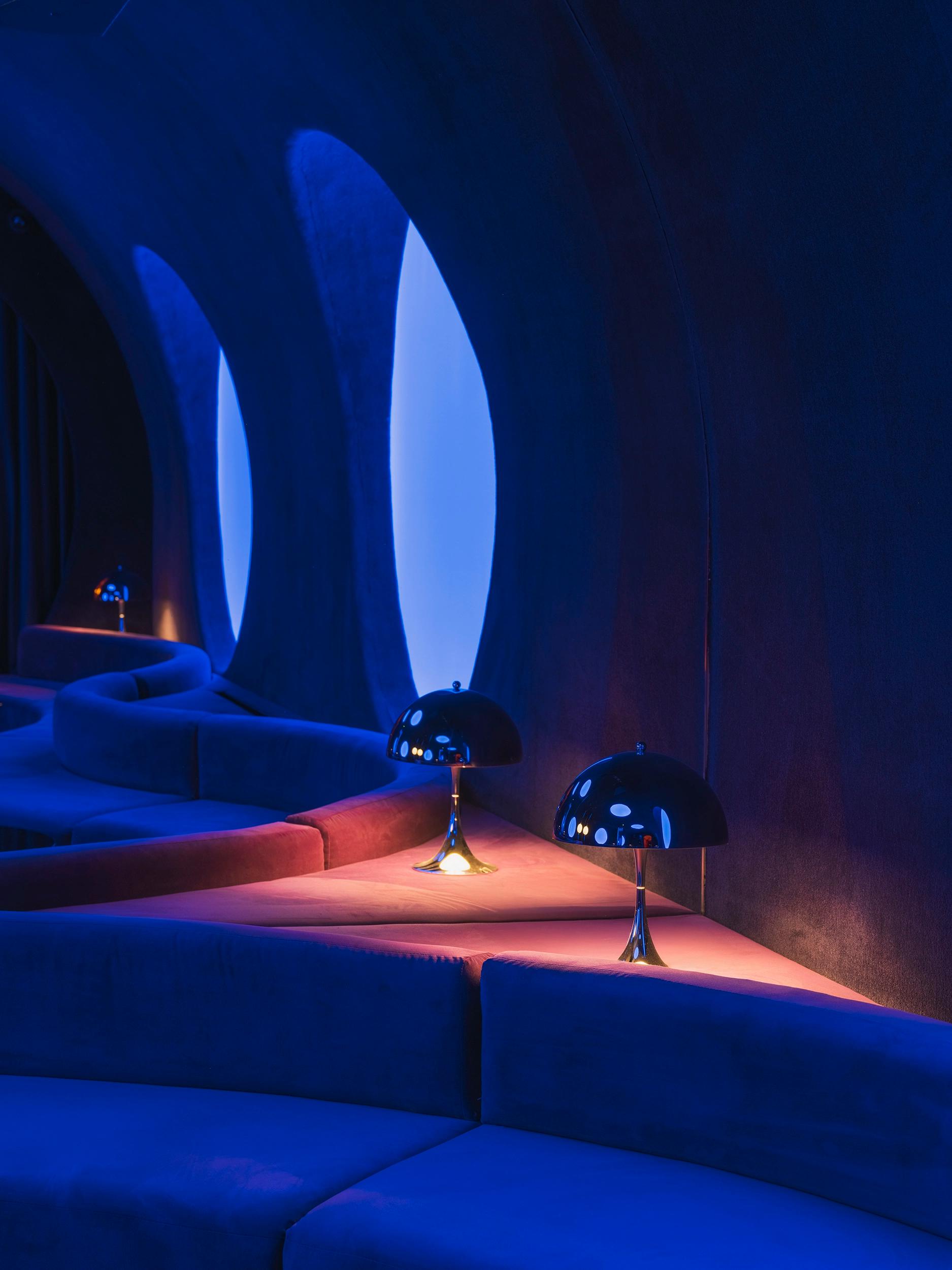
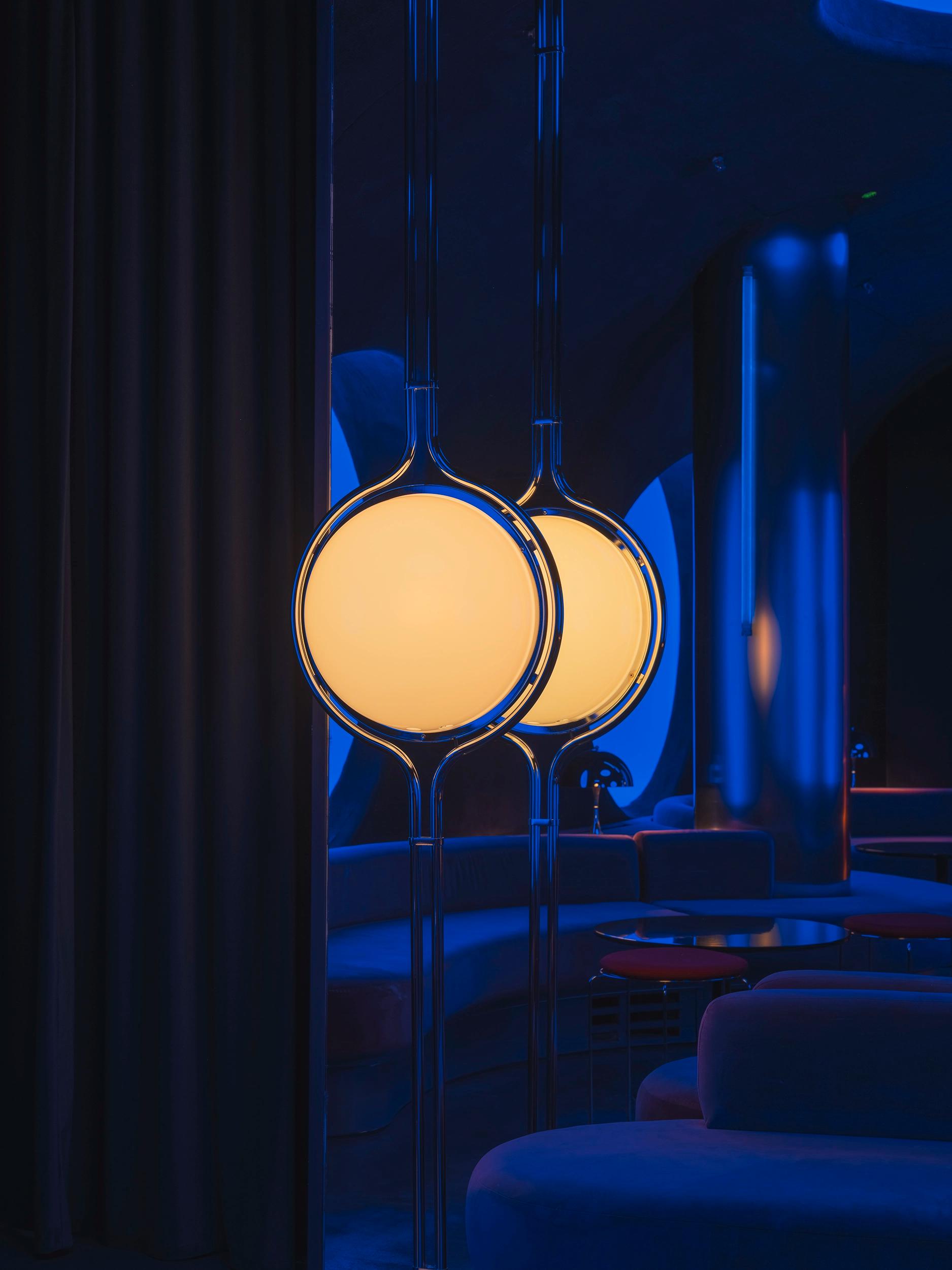
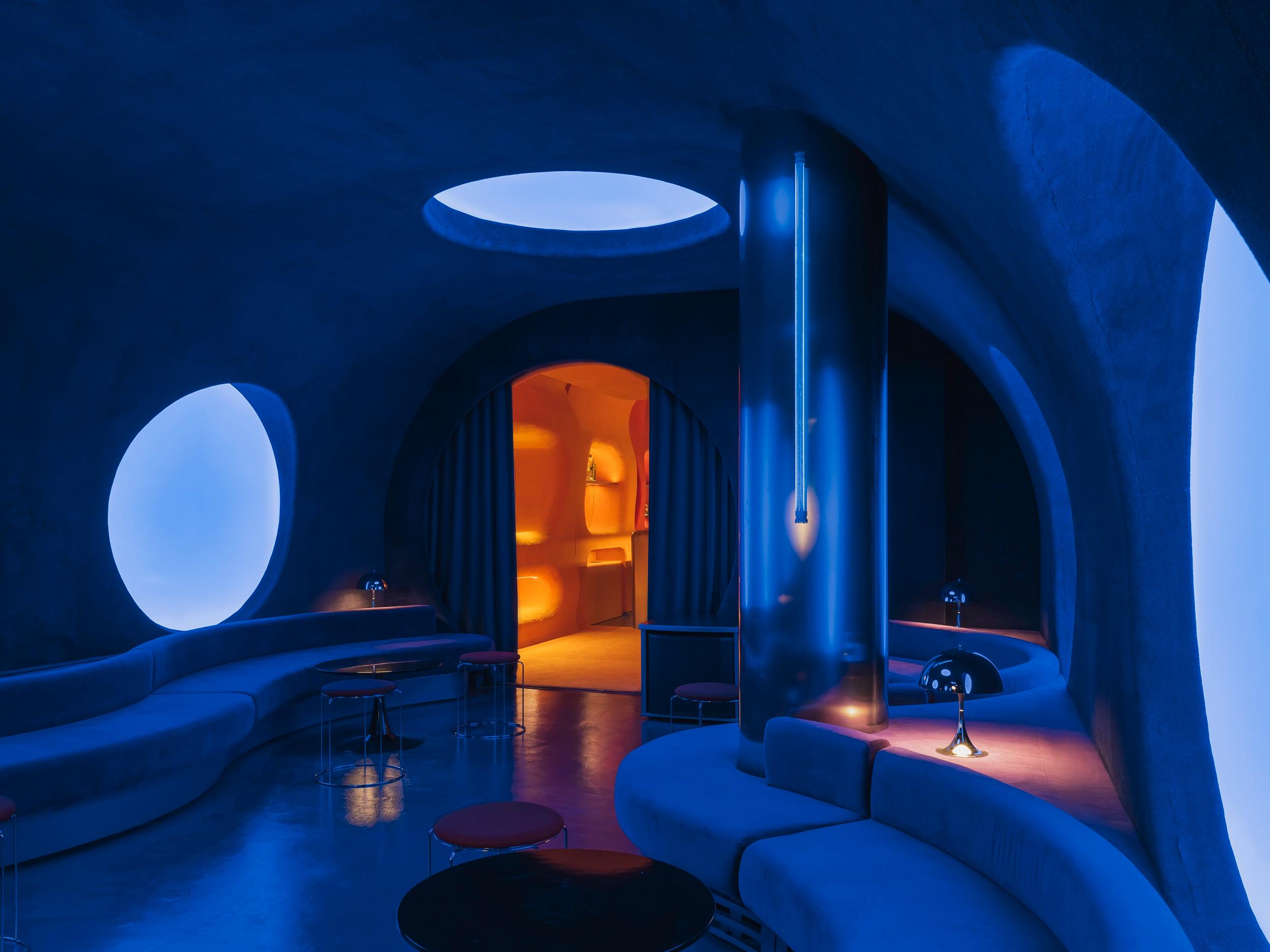
The dome that covers the room incorporates openings in the ceiling and side walls, allowing for dynamic light plays that transform the atmosphere according to the moment and the music. The lighting acts almost as a scenographic element, in constant change, generating an immersive environment that refers to the futuristic visions of the space age and the experimentation with abstract forms and enveloping volumes characteristic of the design of the 60s and 70s. Every corner of the room is a tribute to the limitless creativity of this era, in which utopia and imagination defined the language of design
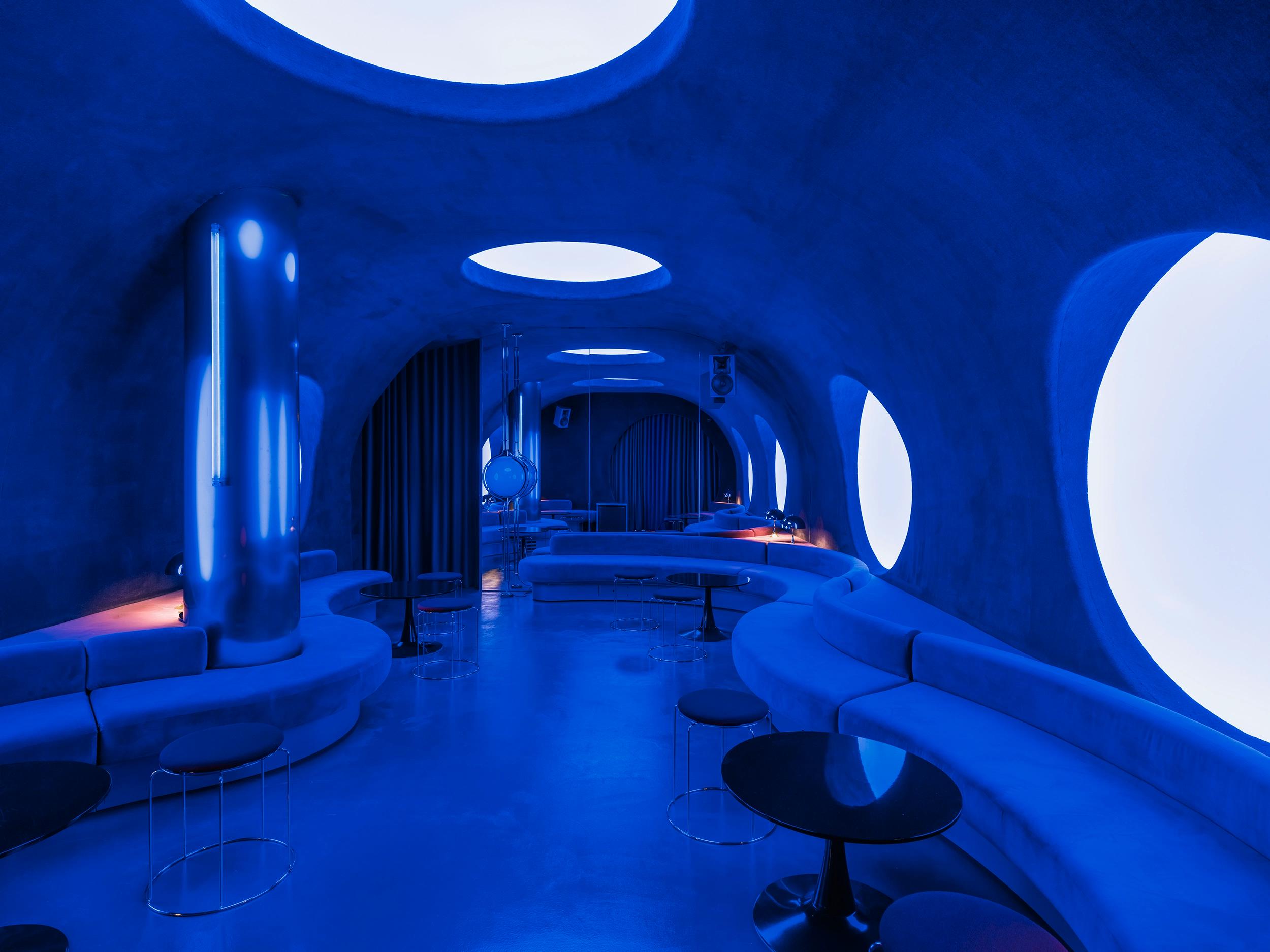
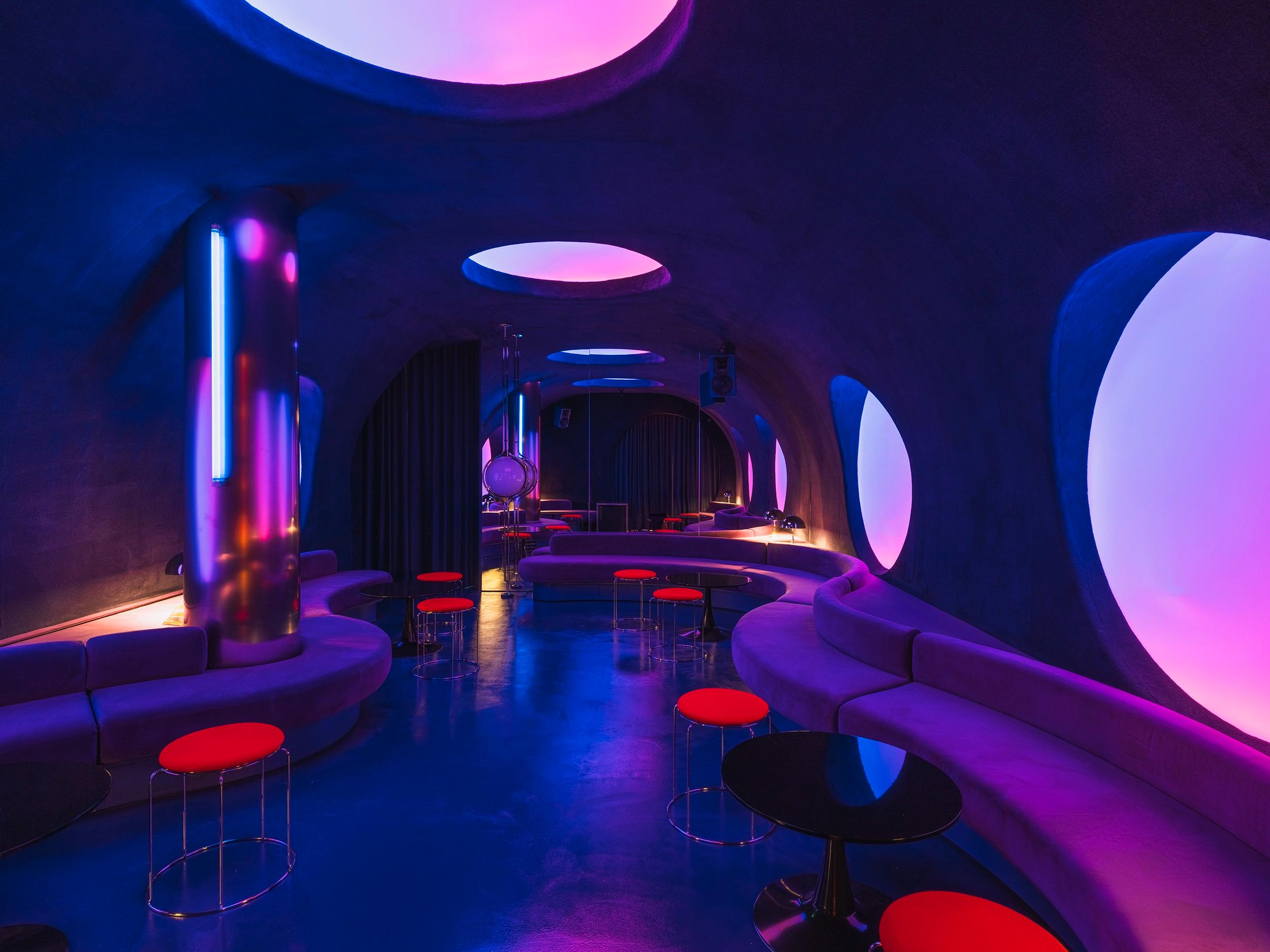
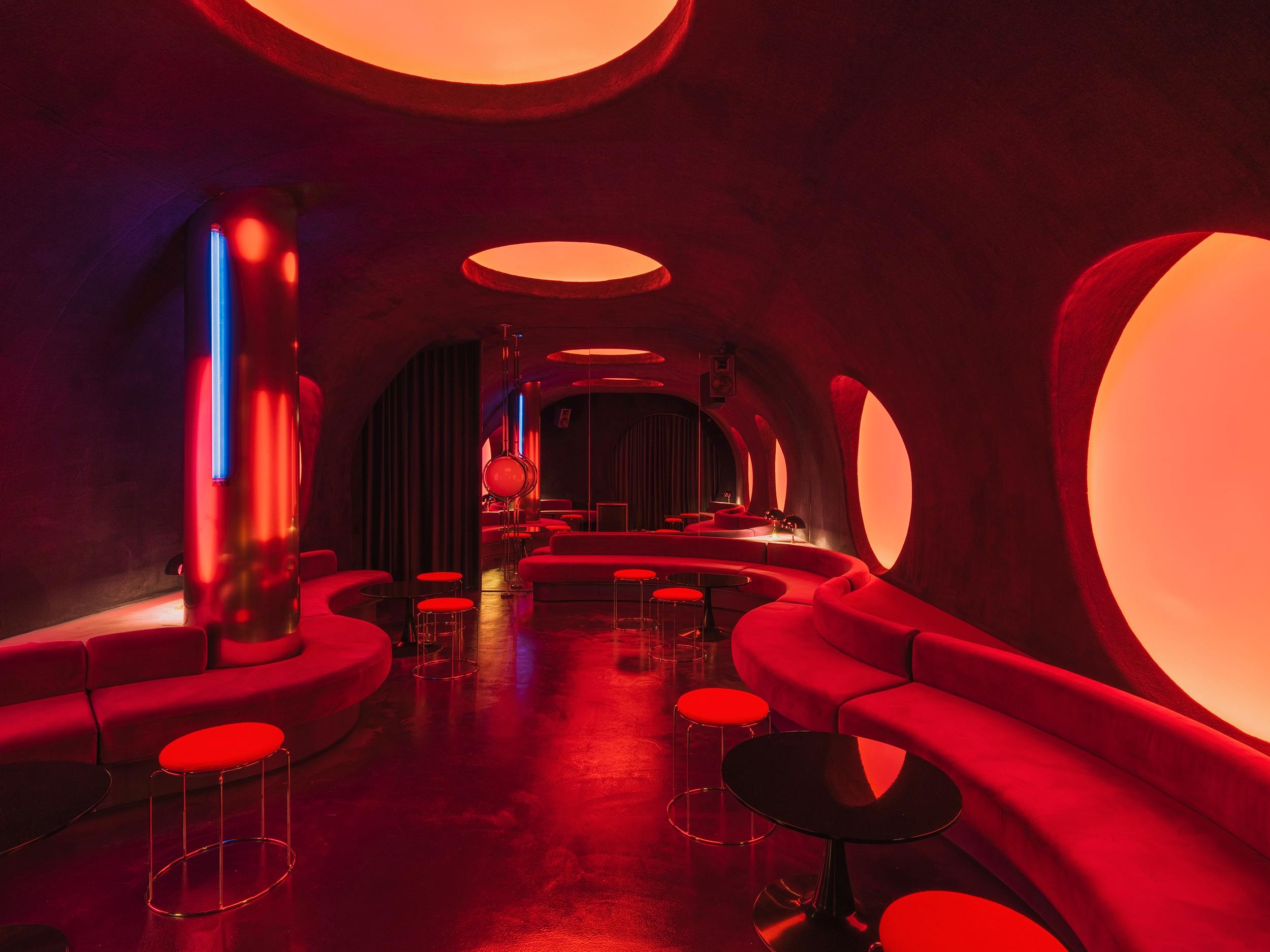
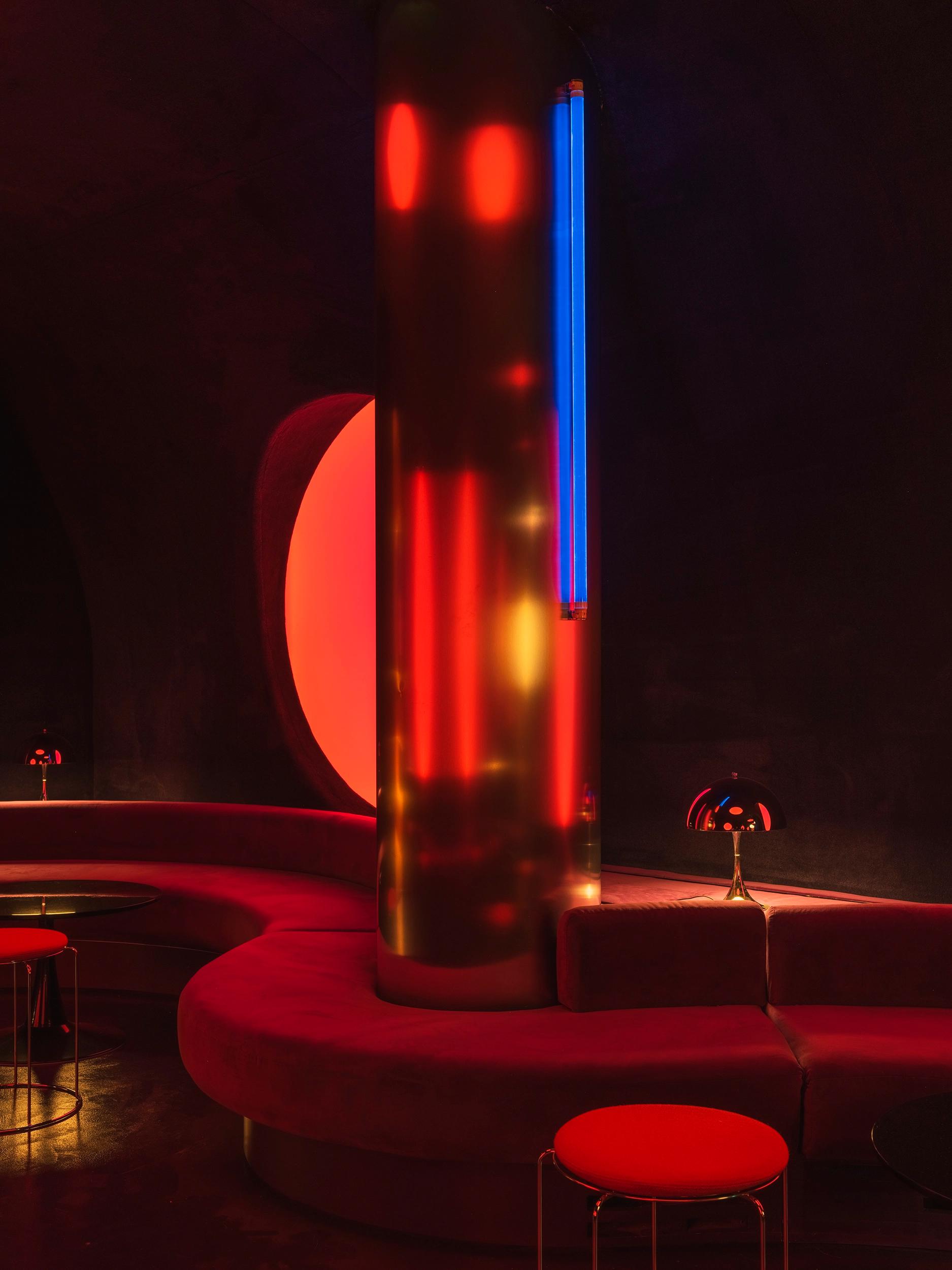
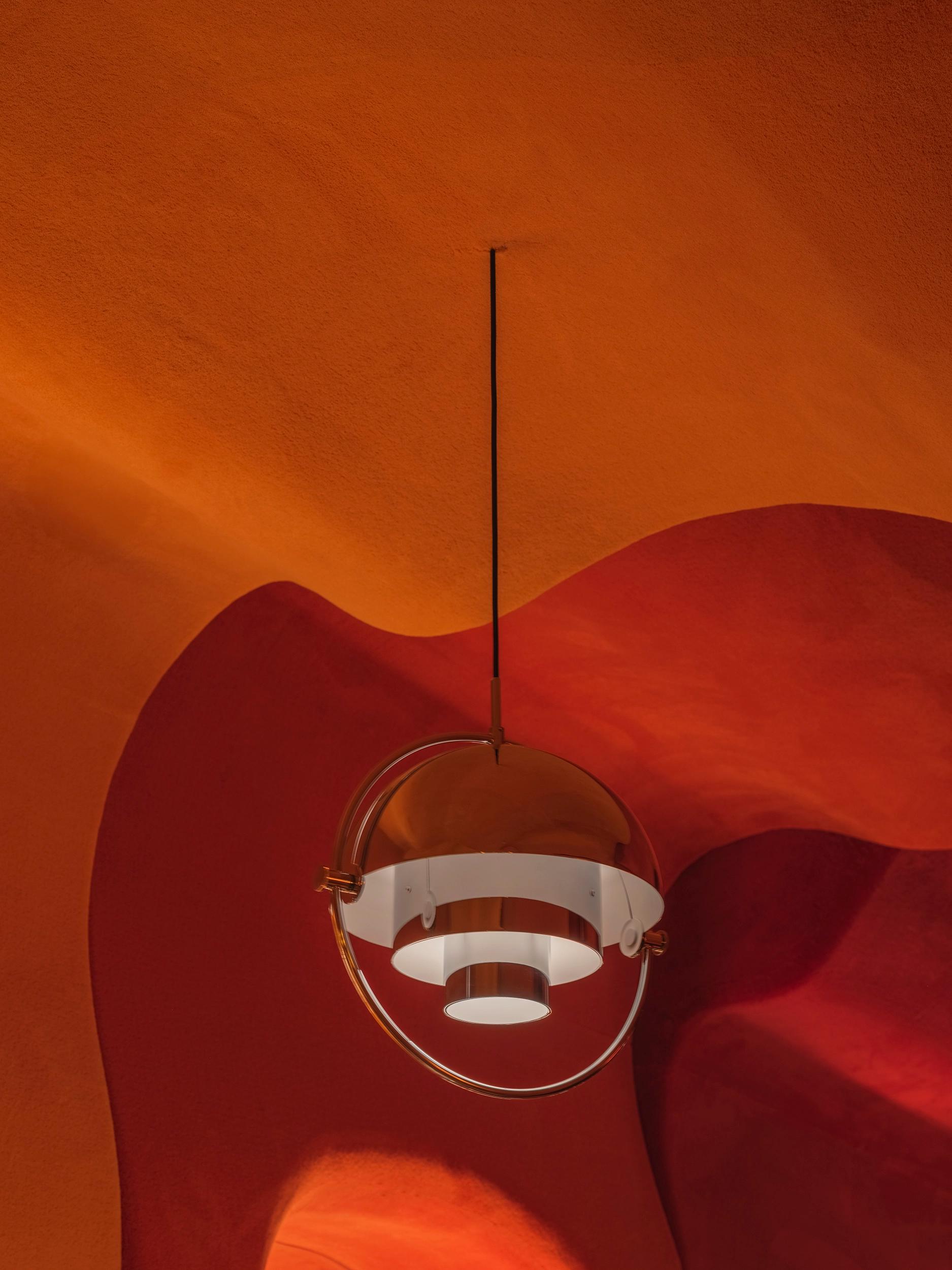
Lighting plays a crucial role in the construction of the atmosphere: over the bar hangs a Multi-Lite Pendant luminaire from GUBI, while in the sofa areas and in the DJ room we find Flowerpot VP2 and Panthella Lamp from Louis Poulsen by Verner Panton, accompanied by the Wire Stool VP11 from &Tradition. In the center of the DJ room, a Dana lamp by Tacchini reinforces the aesthetic of the 60s, providing a unique and enveloping character.
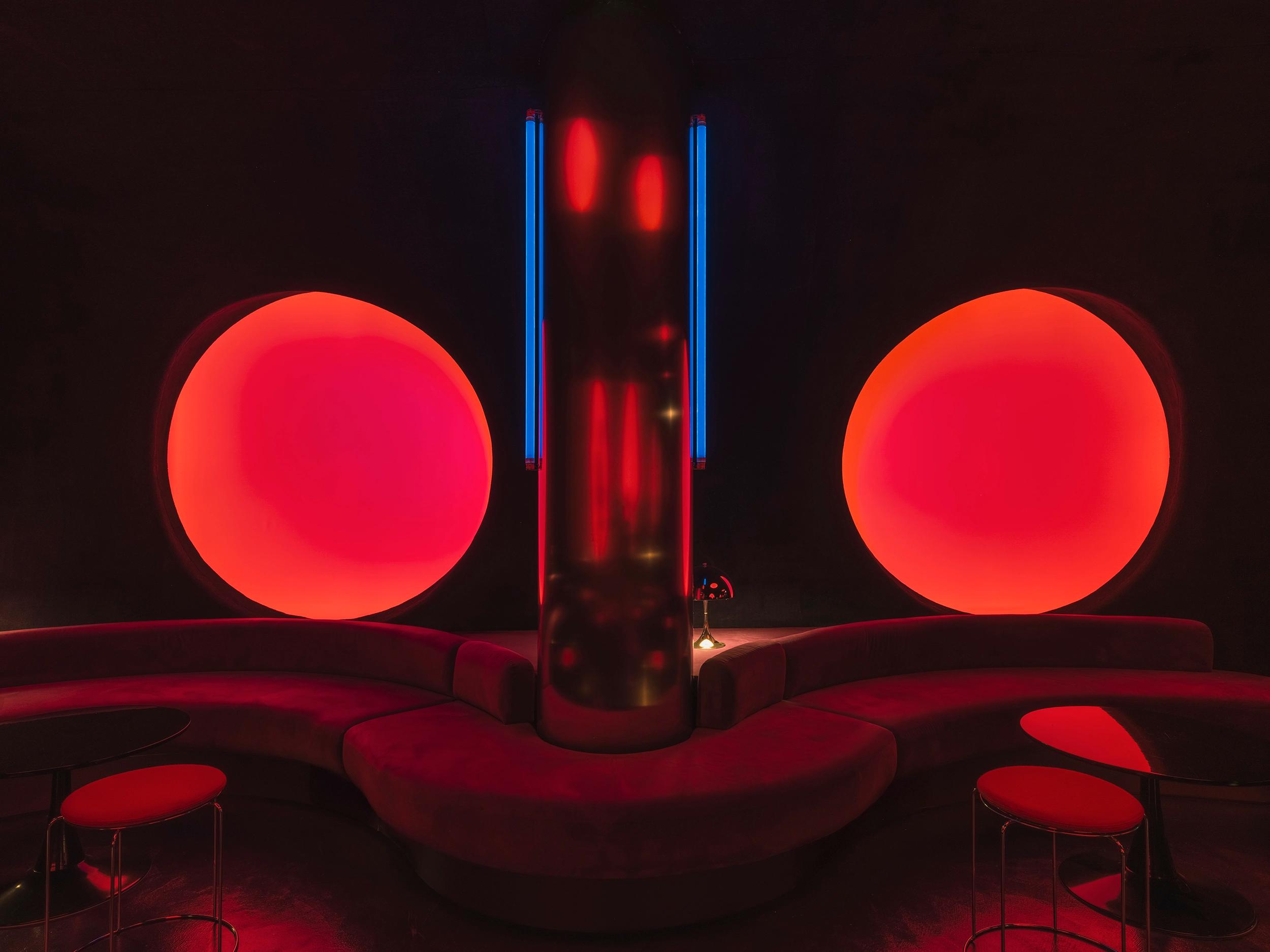
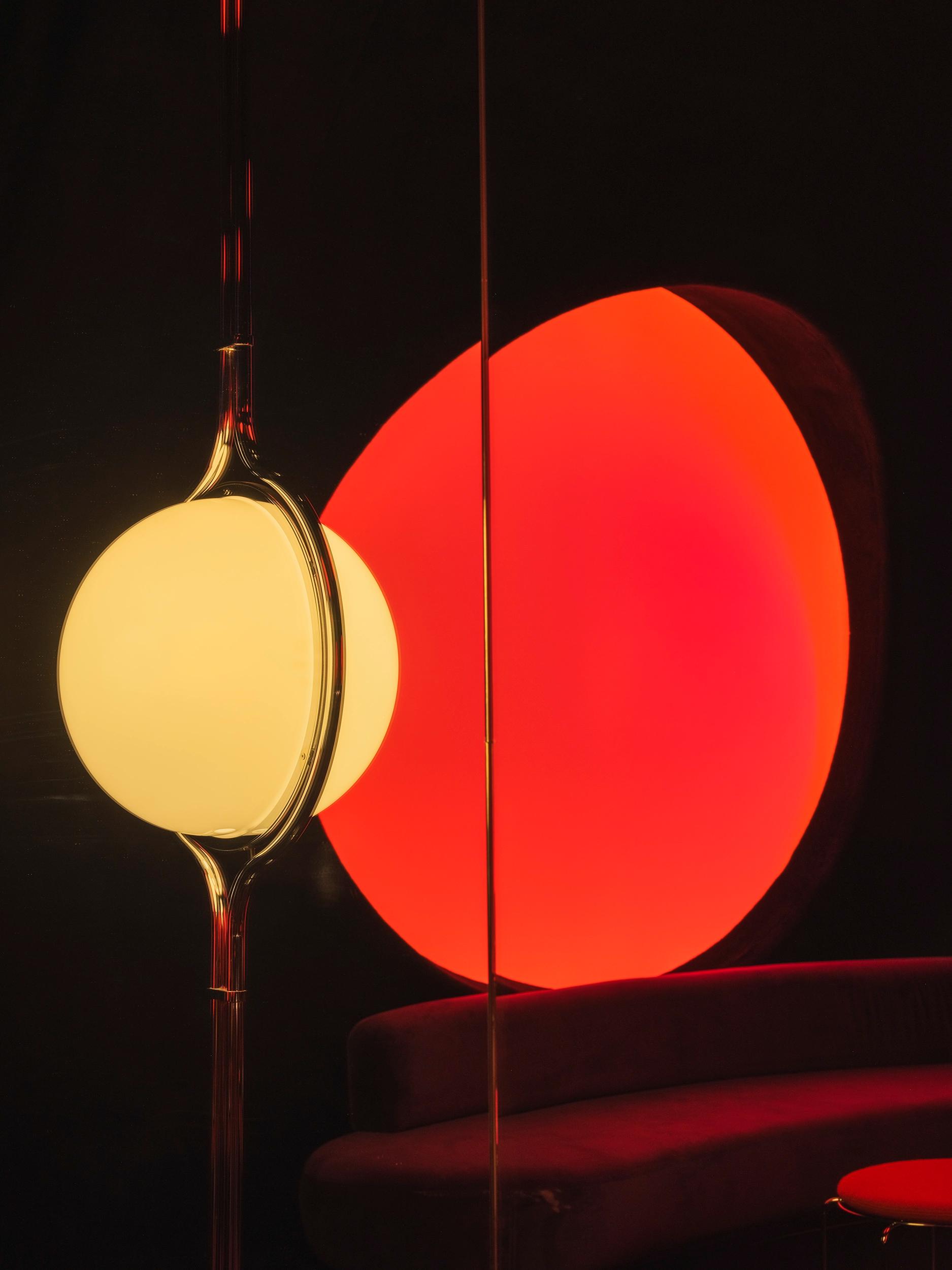
Beyond being a cocktail bar, this project stands as a sensory experience that transports visitors to a different universe. Inspired by the Visiona project by Verner Panton, the design bets on a combination of vibrant colors, fluid shapes, and enveloping elements that generate the sensation of being in an environment out of the ordinary. The attention to detail in every corner of the local allows visitors to immerse themselves in a striking and totally immersive atmosphere, where design, light, and music combine to create an unforgettable experience.
AUTHOR
ISERN SERRA
TEAM LEADER
AASHEEN MITTAL & ARAN ESCUDERO
PHOTOGRAPHY
SALVA LÓPEZ