In the heart of Barcelona, at Avinguda Diagonal 335, a new kind of café is taking shape — one that invites visitors not only to drink coffee but to listen. JAÇ HiFi Café, designed by Isern Serra Studio for clients Ligia and Arnau, open in July 2025. Its name carries multiple meanings: a nod to jazz music itself, a reference to Japan’s jazz kissa — intimate listening bars that flourished from the 1950s onward — and in Catalan, the word “jaç,” which means to recline, rest, and let go.
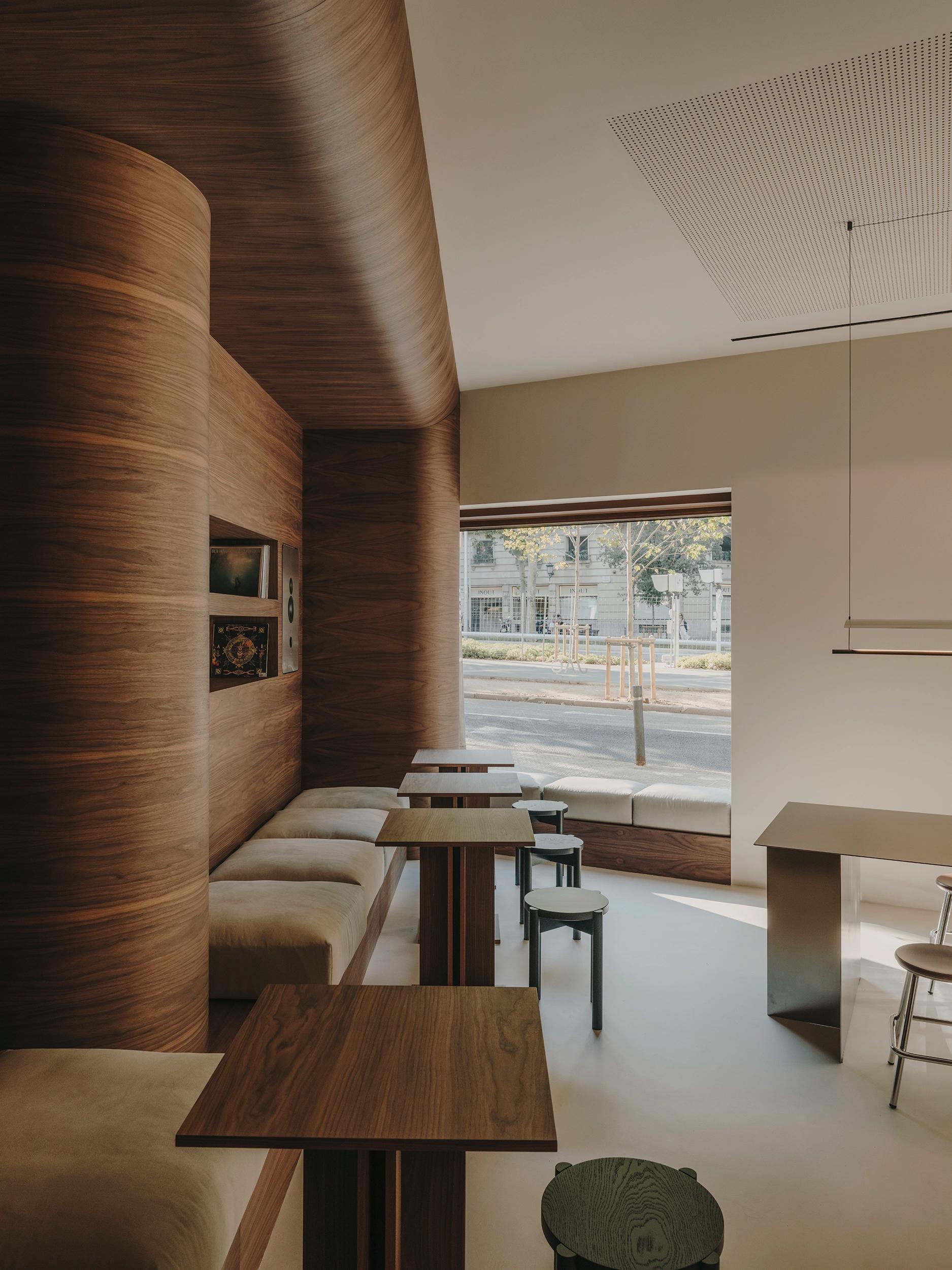
The inspiration for JAÇ stems from the tradition of Japanese jazz kissa, small, dimly lit venues dedicated entirely to the appreciation of recorded jazz. These spaces were neither bars in the Western sense nor cafés in the European style; they were temples of sound, where conversation was minimal, the record player was sacred, and music was played on high-fidelity equipment at volumes that demanded full attention. Originating after the Second World War, kissa provided a haven for serious listeners who could not afford records or audio systems of their own. Over decades, their interiors developed a distinct aesthetic — wood-panelled walls, warm lighting, and seating arranged to face the speakers rather than each other — creating a sense of intimacy and deep focus.
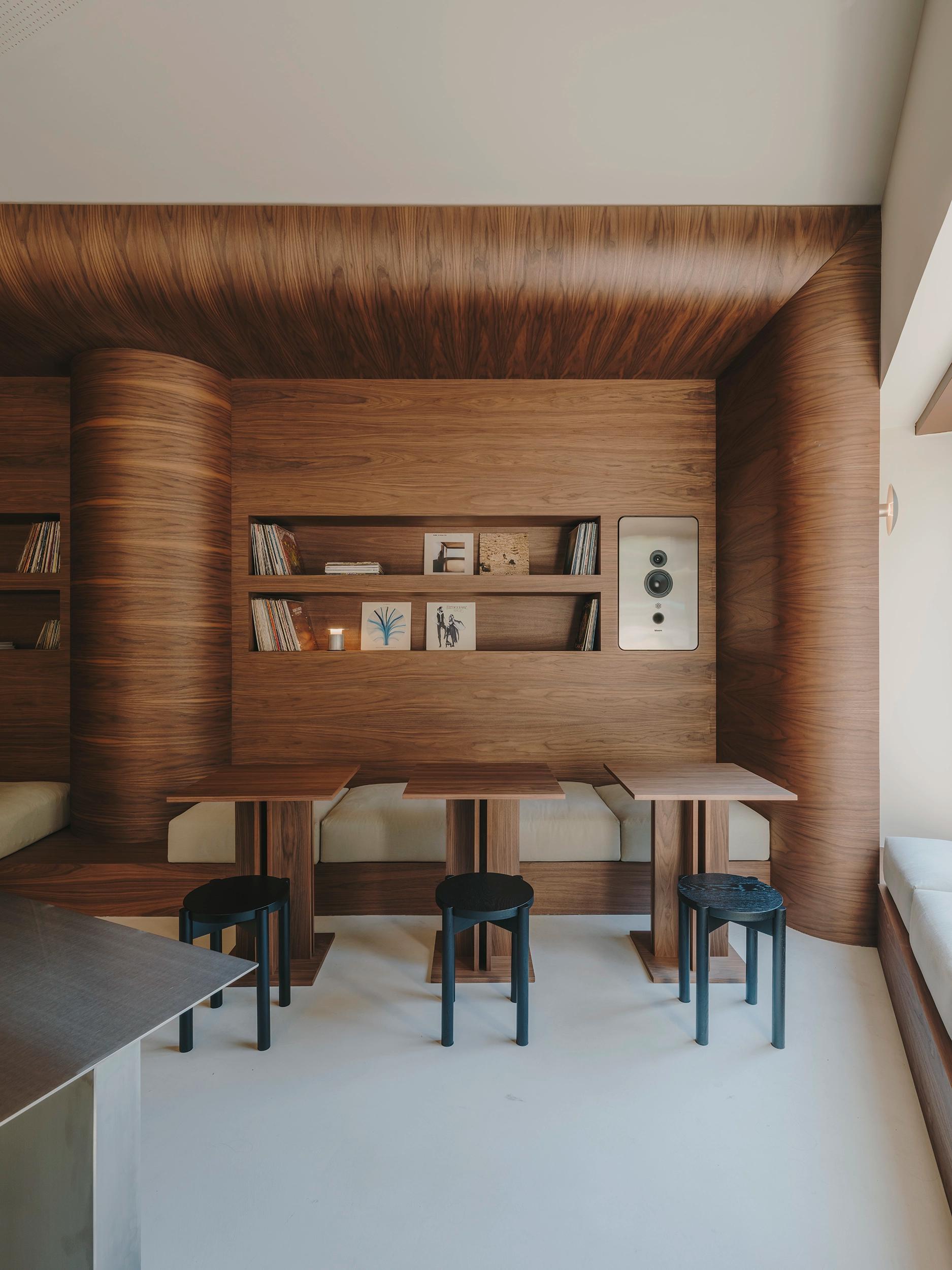
JAÇ HiFi Café reinterprets that philosophy for a contemporary Mediterranean city. The design is warm yet refined, with an emphasis on tactile materials and an atmosphere that feels as familiar as one’s own living room. The space, covering 95 square metres, unfolds in a series of distinct zones, each offering a different relationship with music, people, and the city outside.
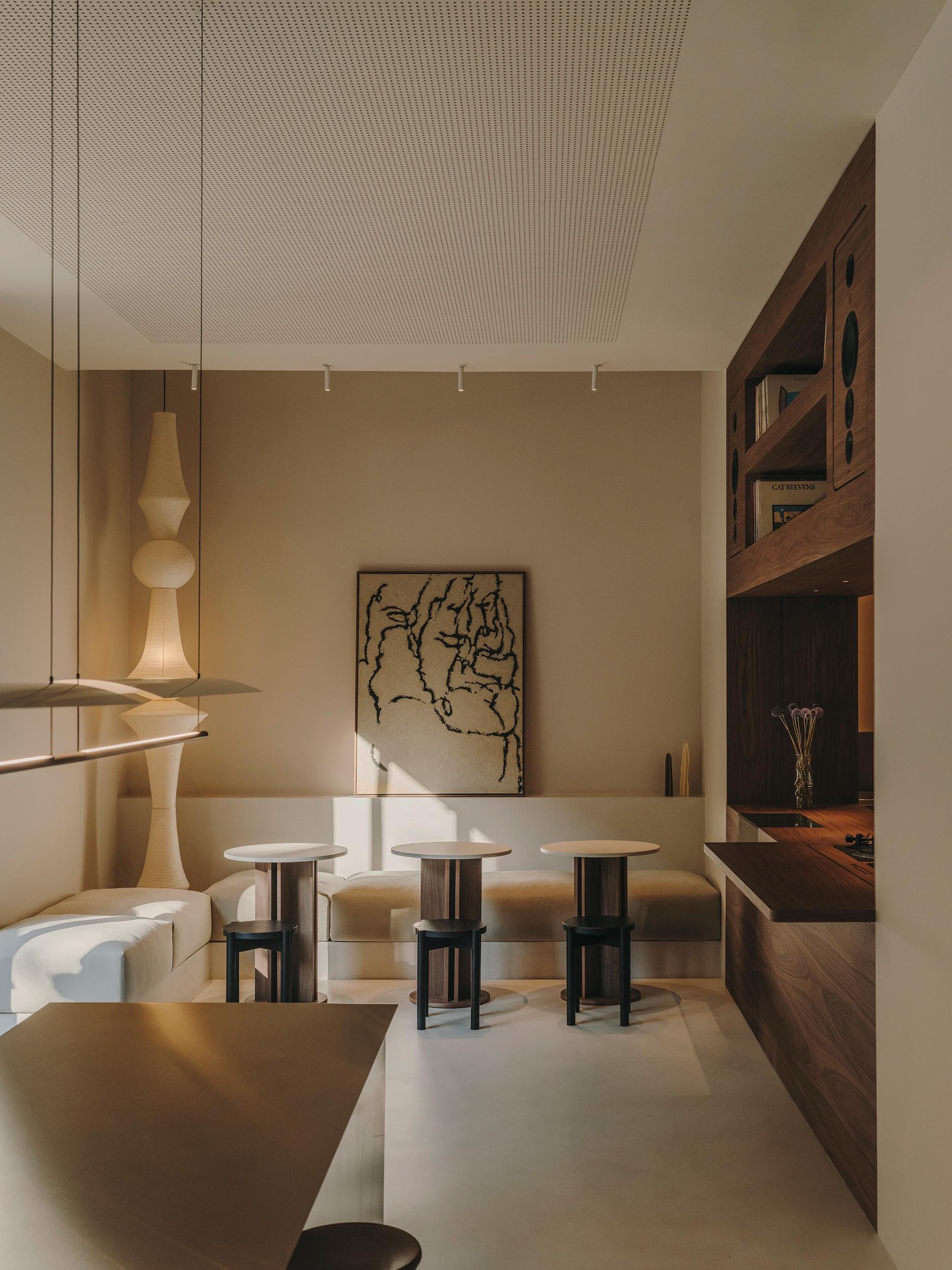
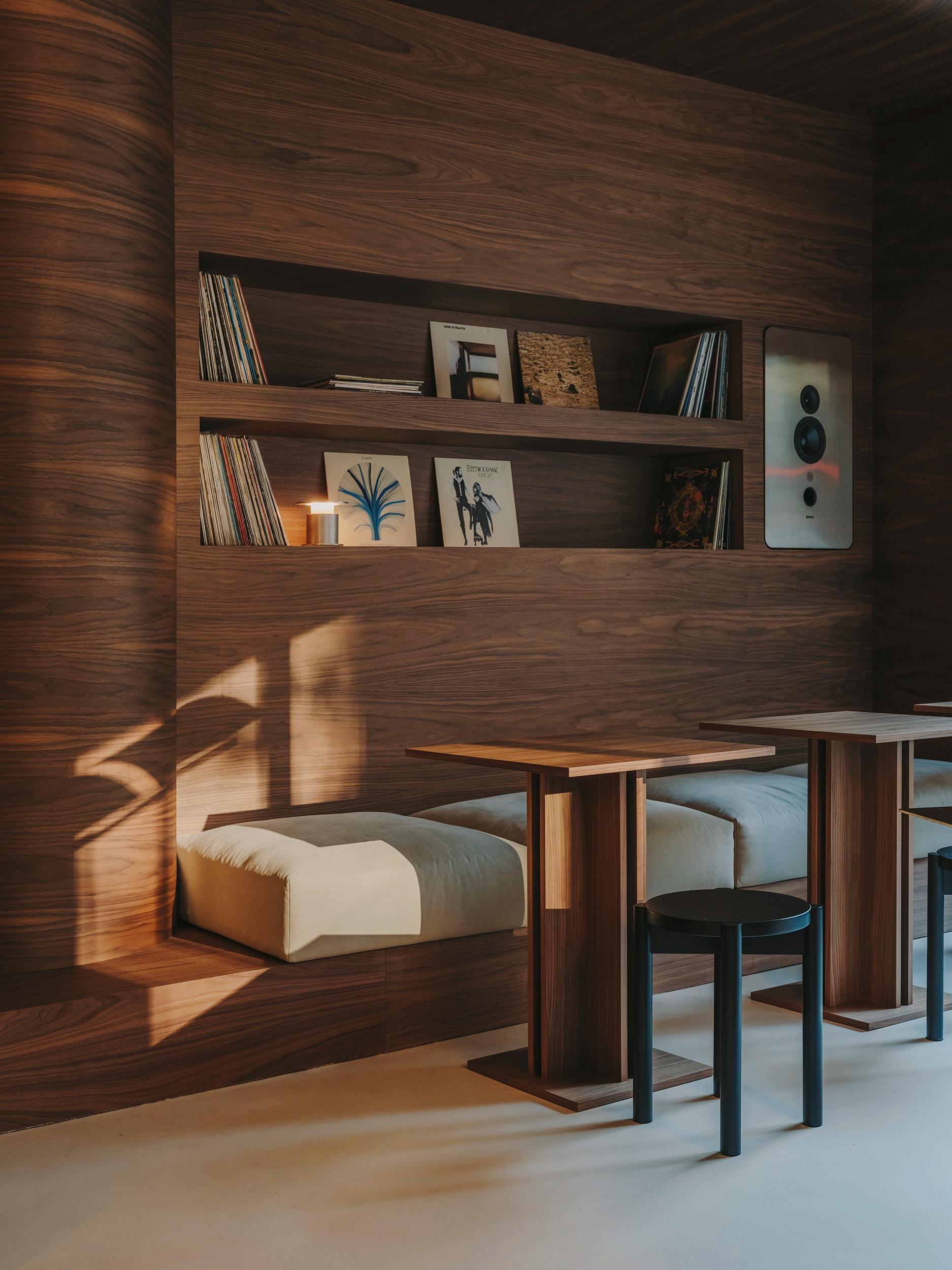
Upon entering, visitors encounter a lounge area anchored by a concrete-based sofa with custom beige cushions. A sculptural Akari E lamp by Isamu Noguchi, produced by Vitra, lends a gentle glow, complemented by custom made walnut tables with lacquered beige tops and stools from Noo.ma. Behind the sofa, an artwork by artist Chidy Wayne provides a visual counterpoint to the muted tones and natural materials.
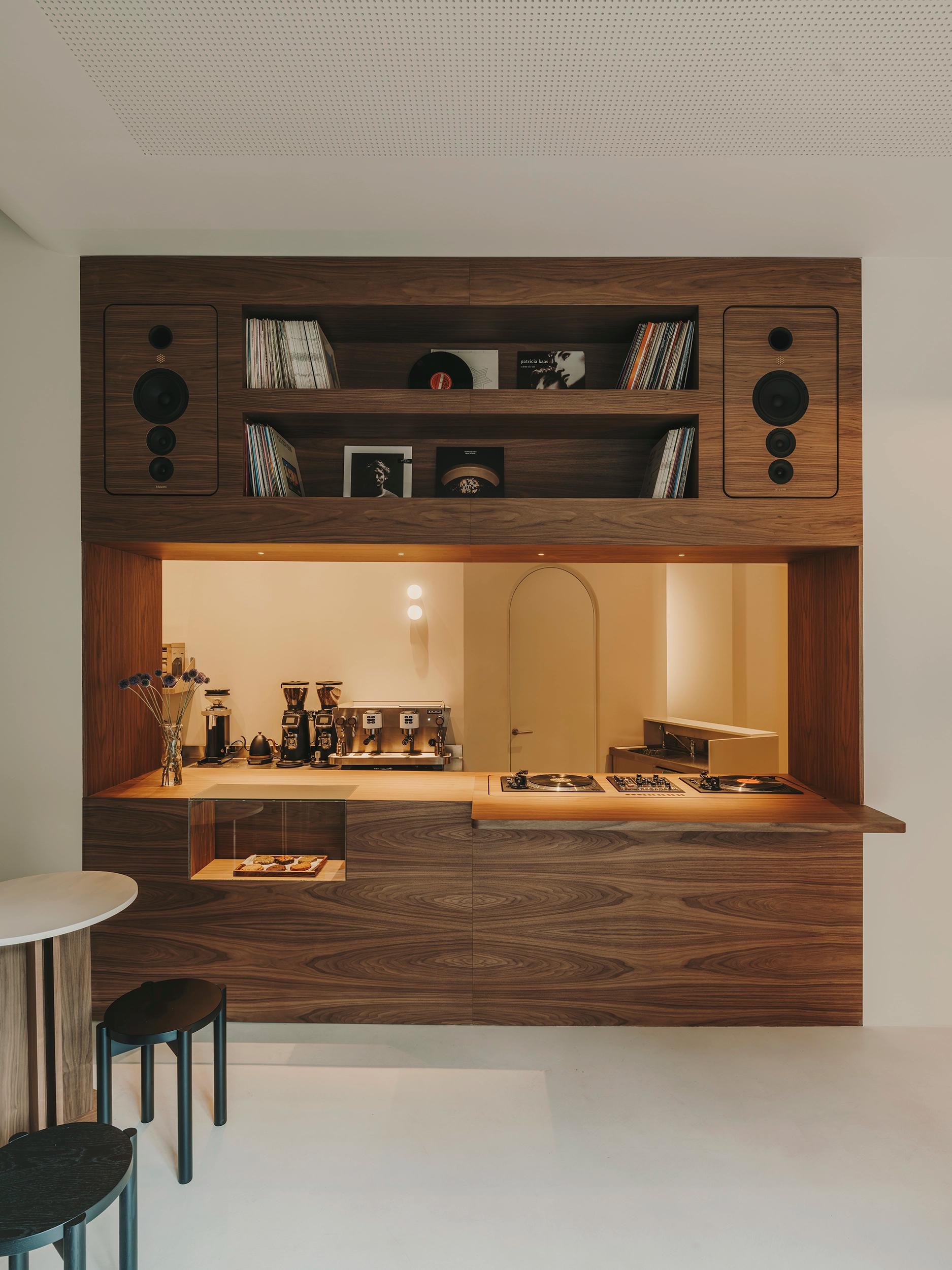
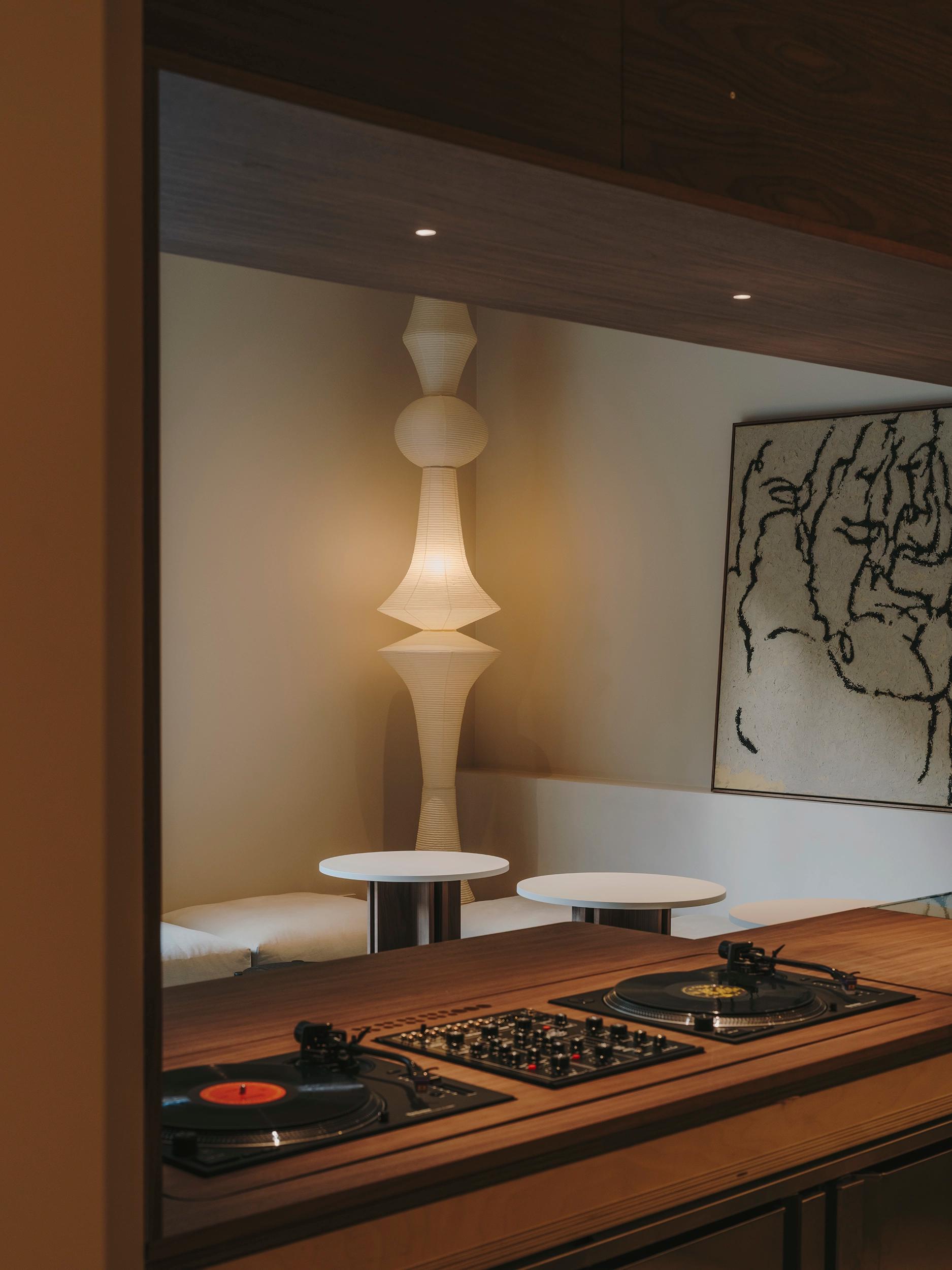
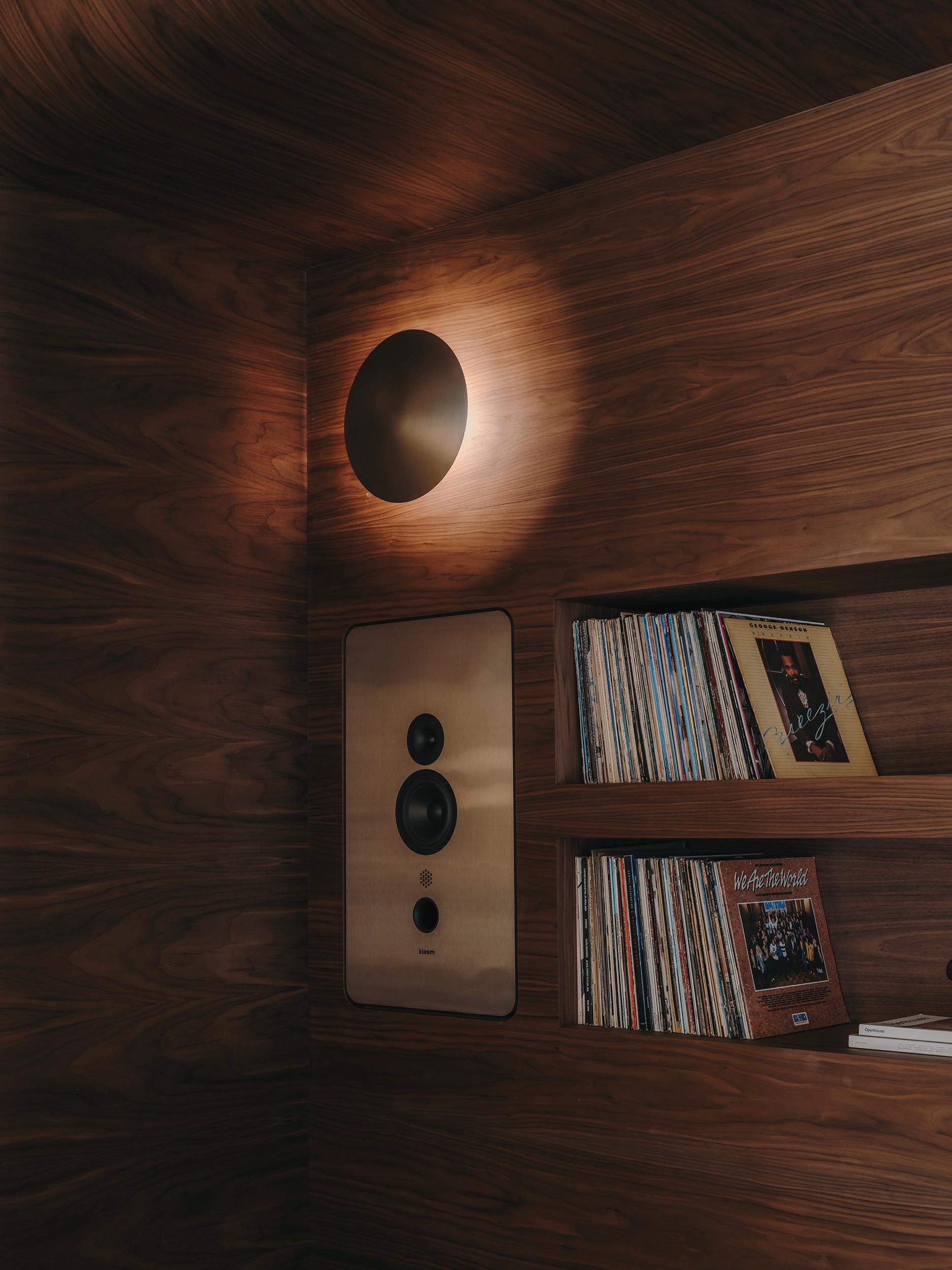
From here, the space flows toward the bar — a monolithic piece of walnut wood that doubles as a giant speaker cabinet produced by Fusteria Vidal. Designed as both functional counter and audio sculpture, the bar integrates a baked goods display, vinyl shelves, and custom speakers by Bloom Island, cut from the same slab of walnut to preserve the natural grain across surfaces. This careful detailing allows the sound system to merge seamlessly with the furniture, echoing the kissa tradition of treating audio equipment as an integral part of the room’s architecture.
At the café’s centre stands a stainless-steel table designed by the studio, with a brutalist edge softened by the warm tones of surrounding wooden and metallic stools. Above, the Lámina pendant by Antoni Arola (Santa & Cole) casts a diffused light that enhances the table’s sculptural presence.
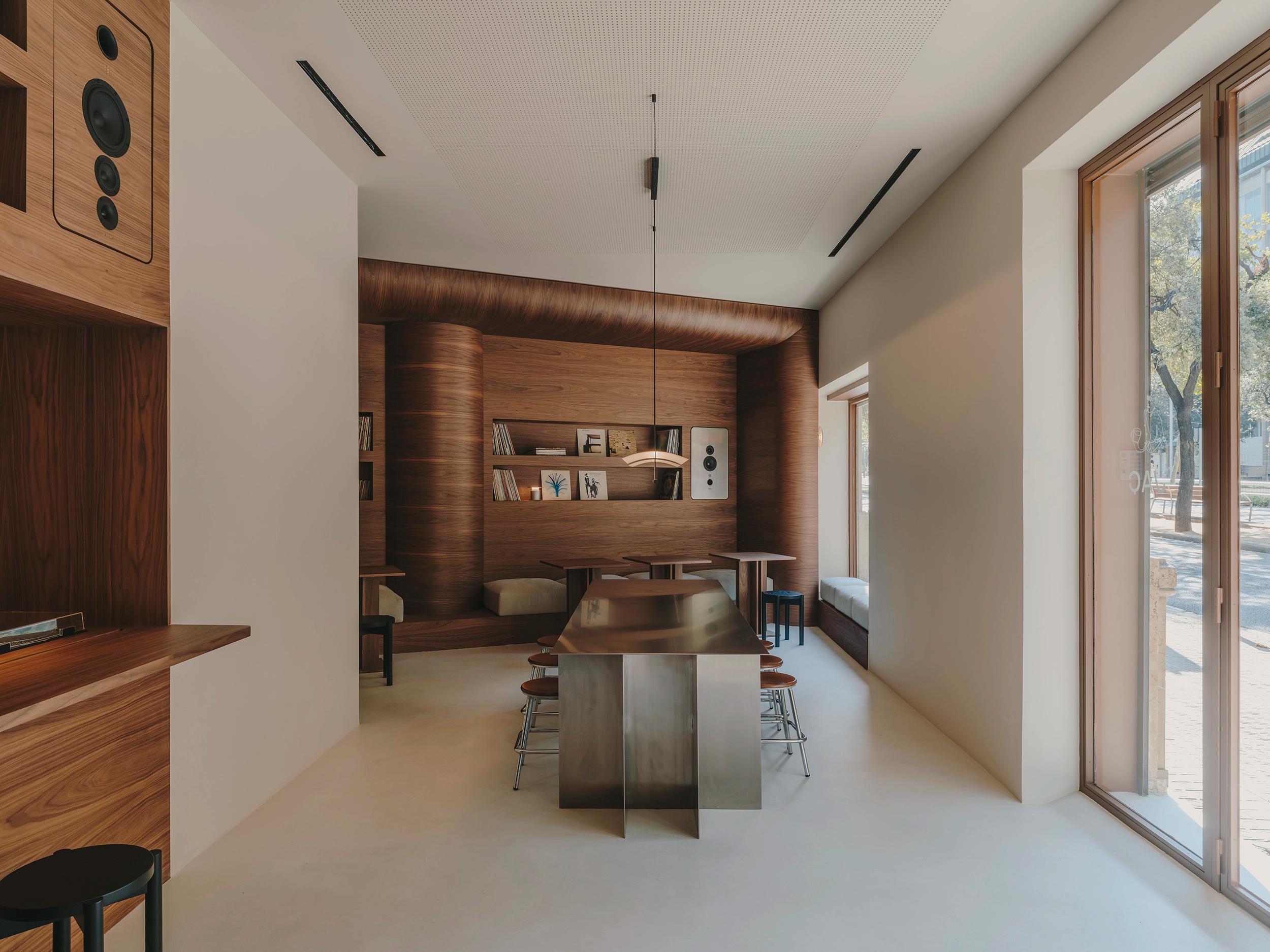
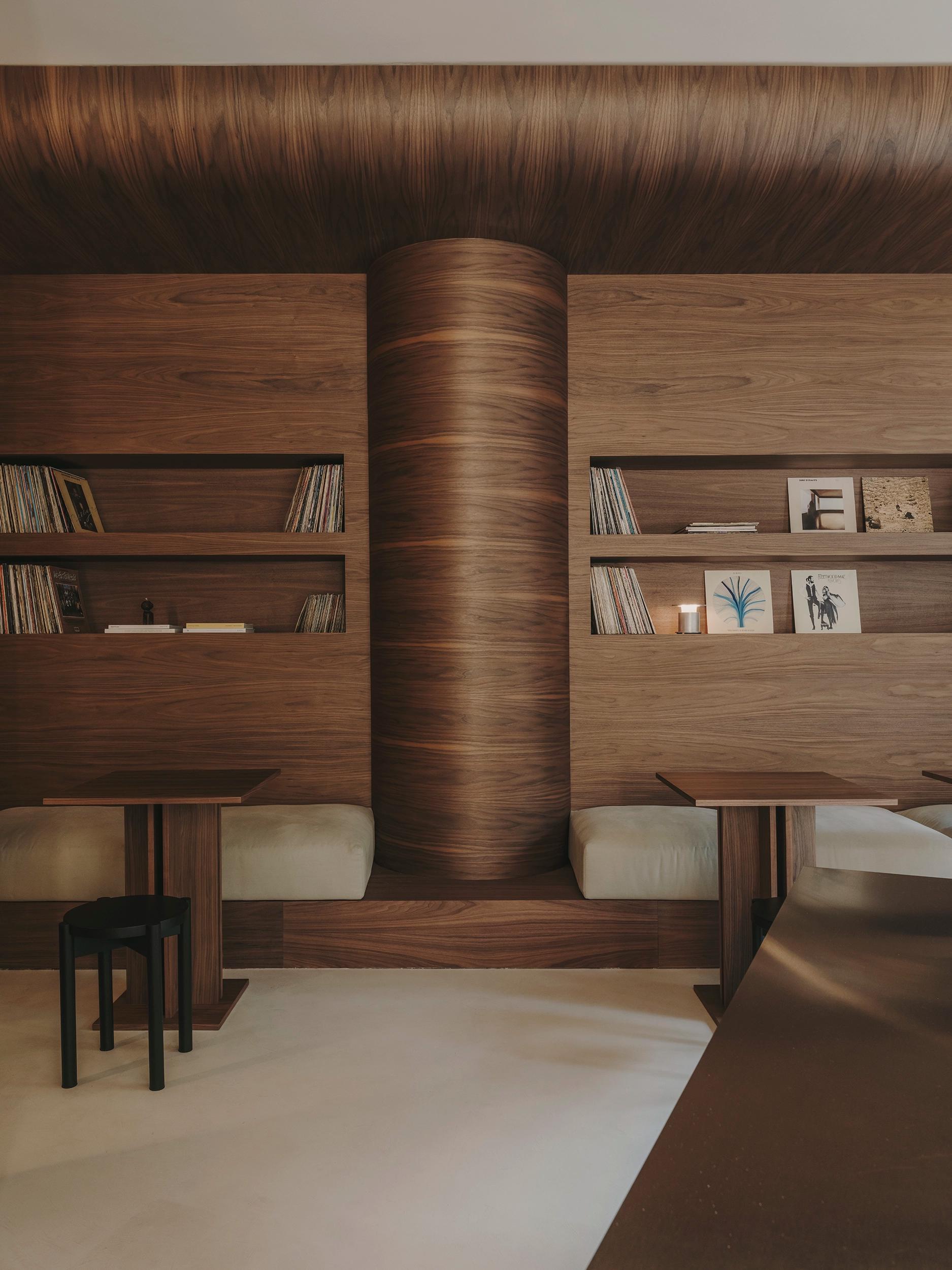
The most dramatic element of JAÇ, however, lies toward the rear: a large walnut-wood installation that curves across walls and ceiling to form a semi-enclosed listening alcove, produced by Fusteria Vidal. This architectural sculpture is divided by a cylindrical wooden column, its shelves filled with vinyl records, and on each side, stainless-steel Bloom Island speakers. The effect is immersive — a space that seems to embrace the listener, pulling them into a cocoon of warm wood and resonant sound. The integrated seating here is informal, with custom cushions and low walnut tables, lit by a Disco wall lamp by Jordi Miralbell and Mariona Reventós (Santa & Cole) that adds a subtle, theatrical touch.
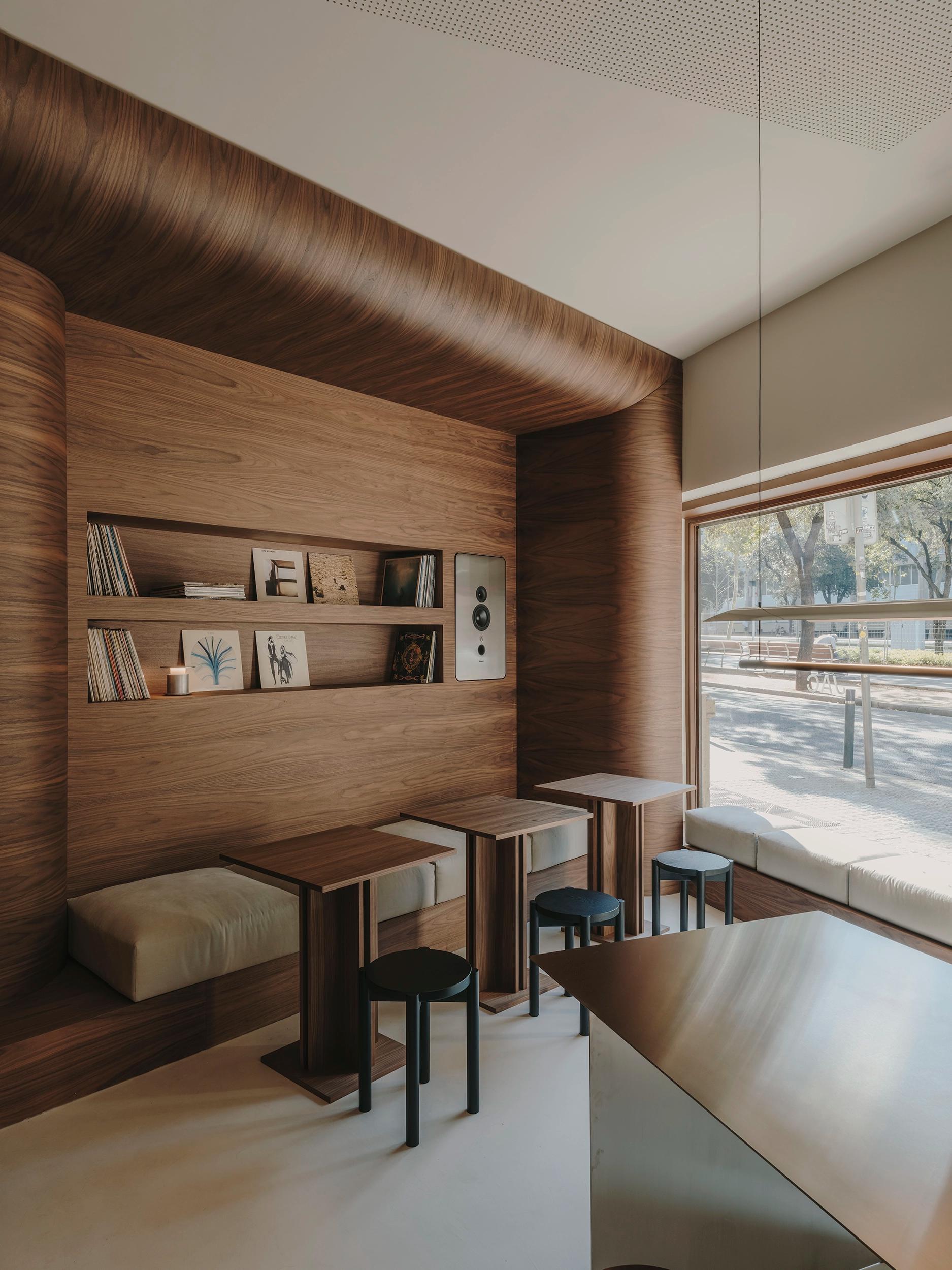
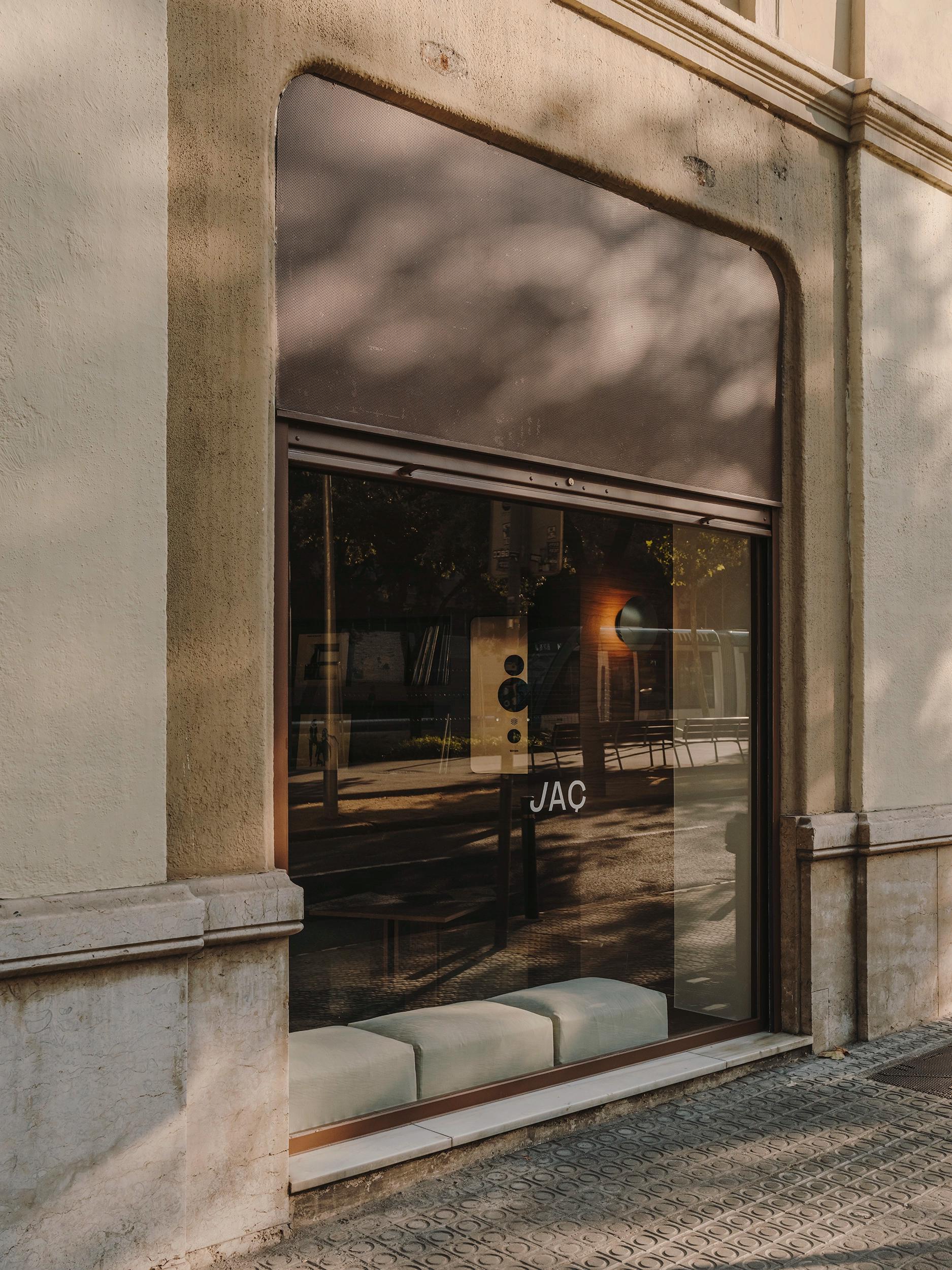
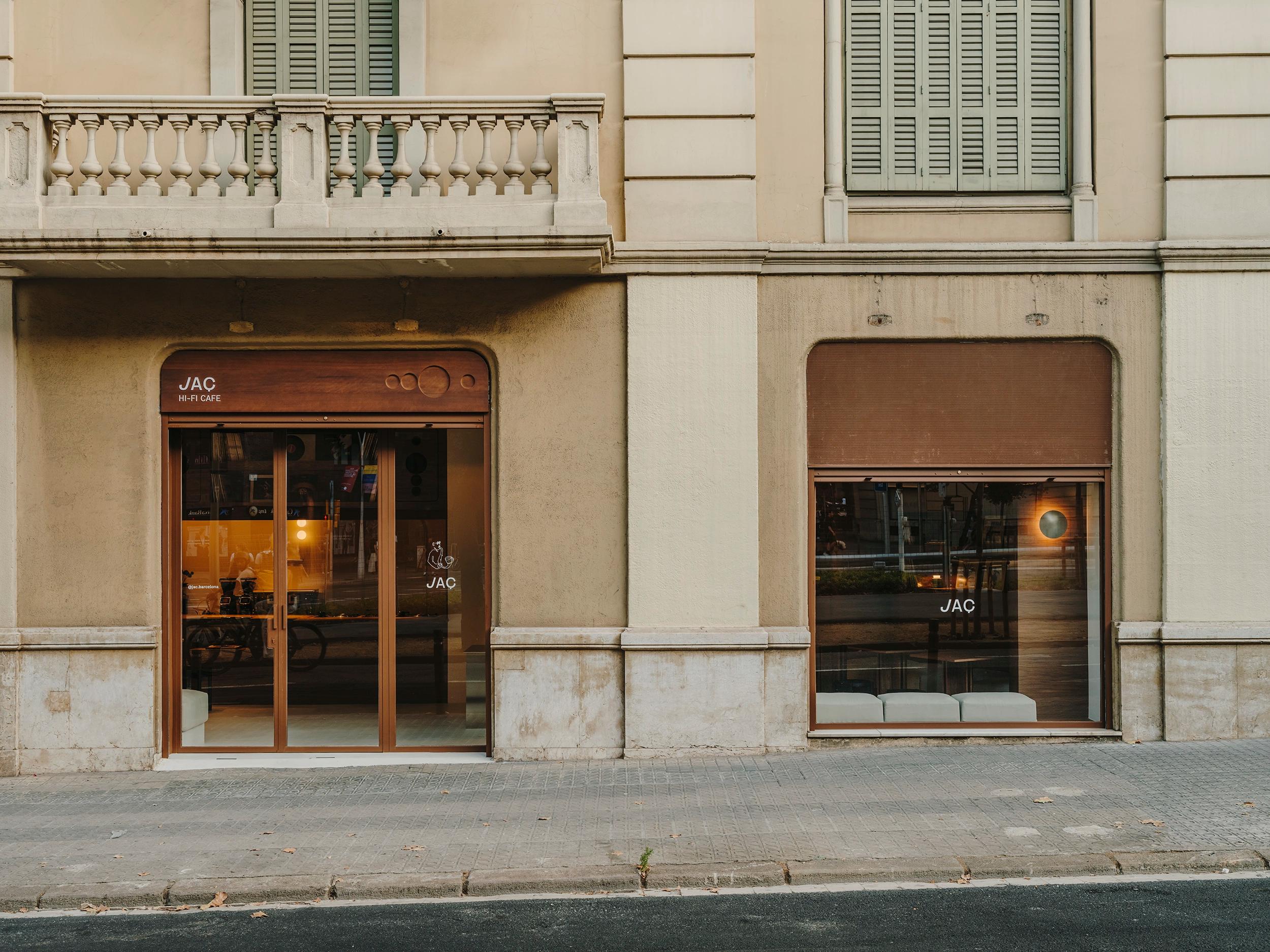
Additional pockets of intimacy are woven throughout the layout: a window niche with seating for four offers a connection to the street, while still feeling tucked away; the bathrooms are discreetly integrated; and the façade itself becomes part of the storytelling. Clad in iroko wood stained to match the walnut interior, the main door bears the café’s name and four circular indents — a symbolic reference to speaker cones. Through the adjacent window, passersby catch glimpses of the walnut sculpture, with a Disco lamp glowing at its edge like a beacon for the sonically curious.
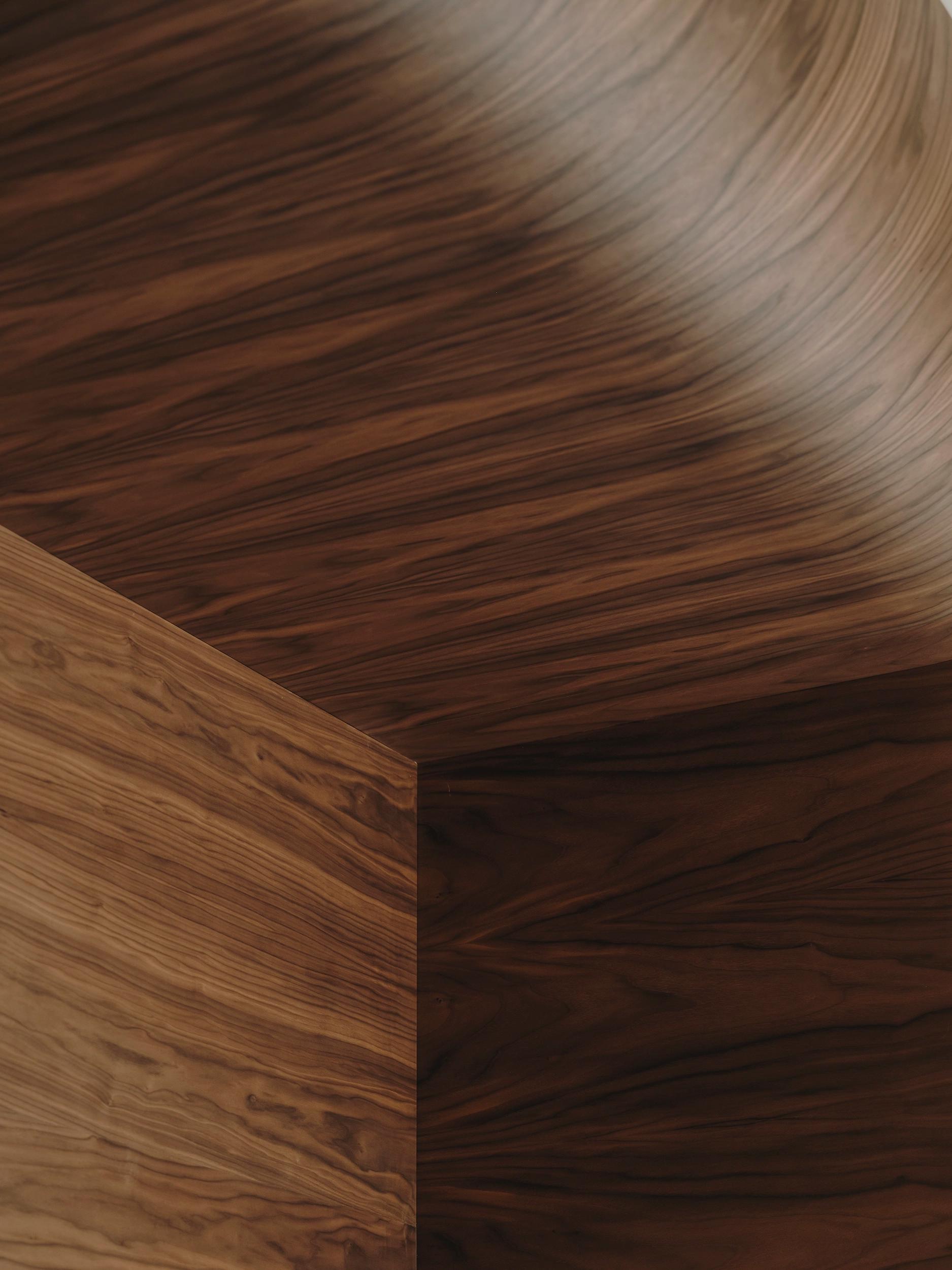
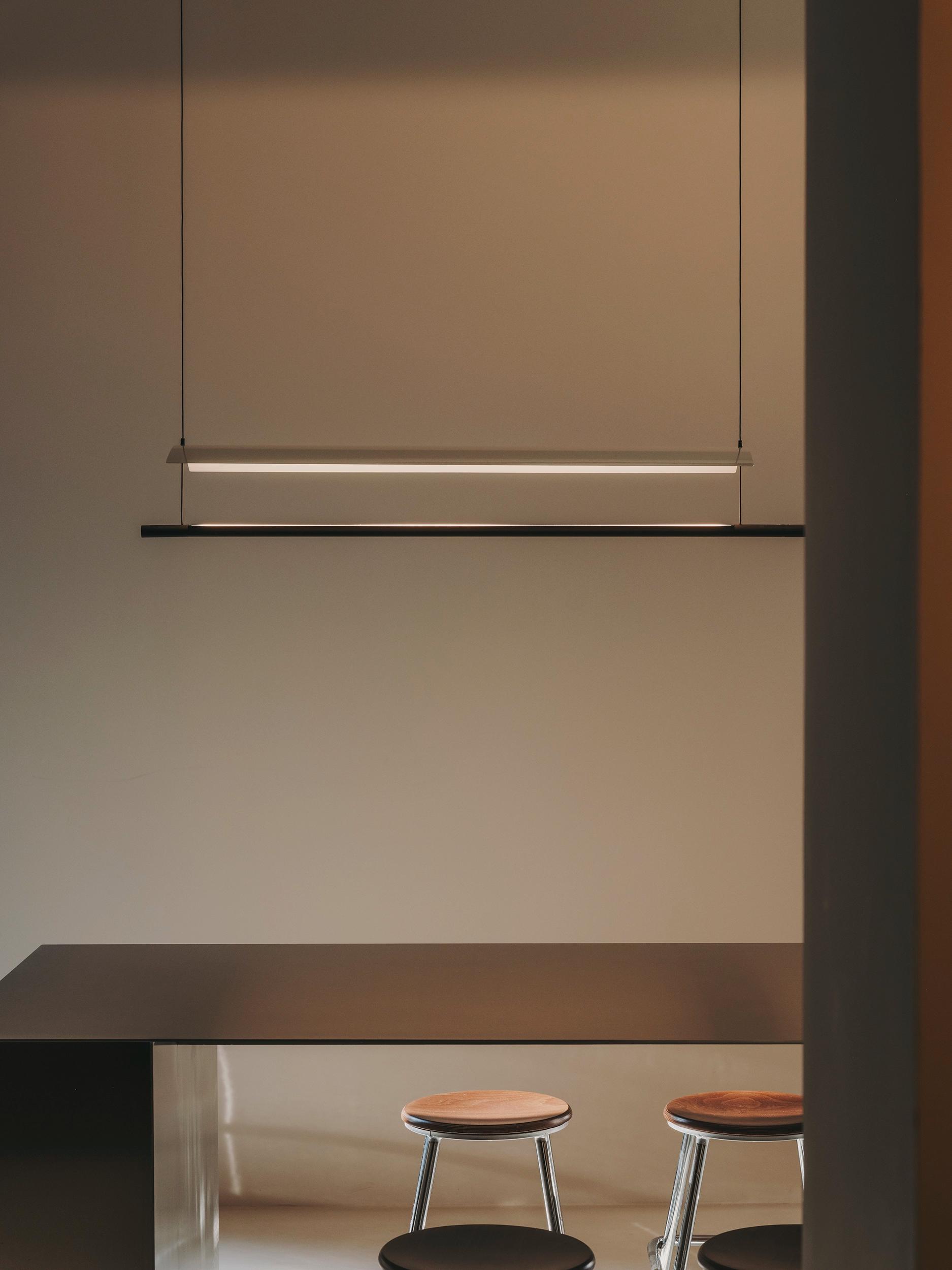
Materials play a central role in unifying these varied spaces. The floor, walls, and ceiling are finished in warm beige microcement, creating a monochromatic envelope that allows the walnut wood to stand out in rich contrast. Stainless steel elements bring a contemporary edge, while the custom beige cushions soften the harder surfaces, bridging Japanese precision with Mediterranean ease. Lighting, too, is treated as an architectural element — each fixture chosen not only for its form but for how it shapes atmosphere, marks transitions, and frames moments within the café.
JAÇ HiFi Café ultimately reimagines the jazz kissa experience for 21st-century Barcelona. It offers a place to slow down, to sit alone or with friends, to discover a song or hear an old favourite in new detail, and to inhabit a space where design, music, and human presence are in perfect balance.
AUTHOR
ISERN SERRA
TEAM LEADER
AASHEEN MITTAL
PHOTOGRAPHY
SALVA LÓPEZ